
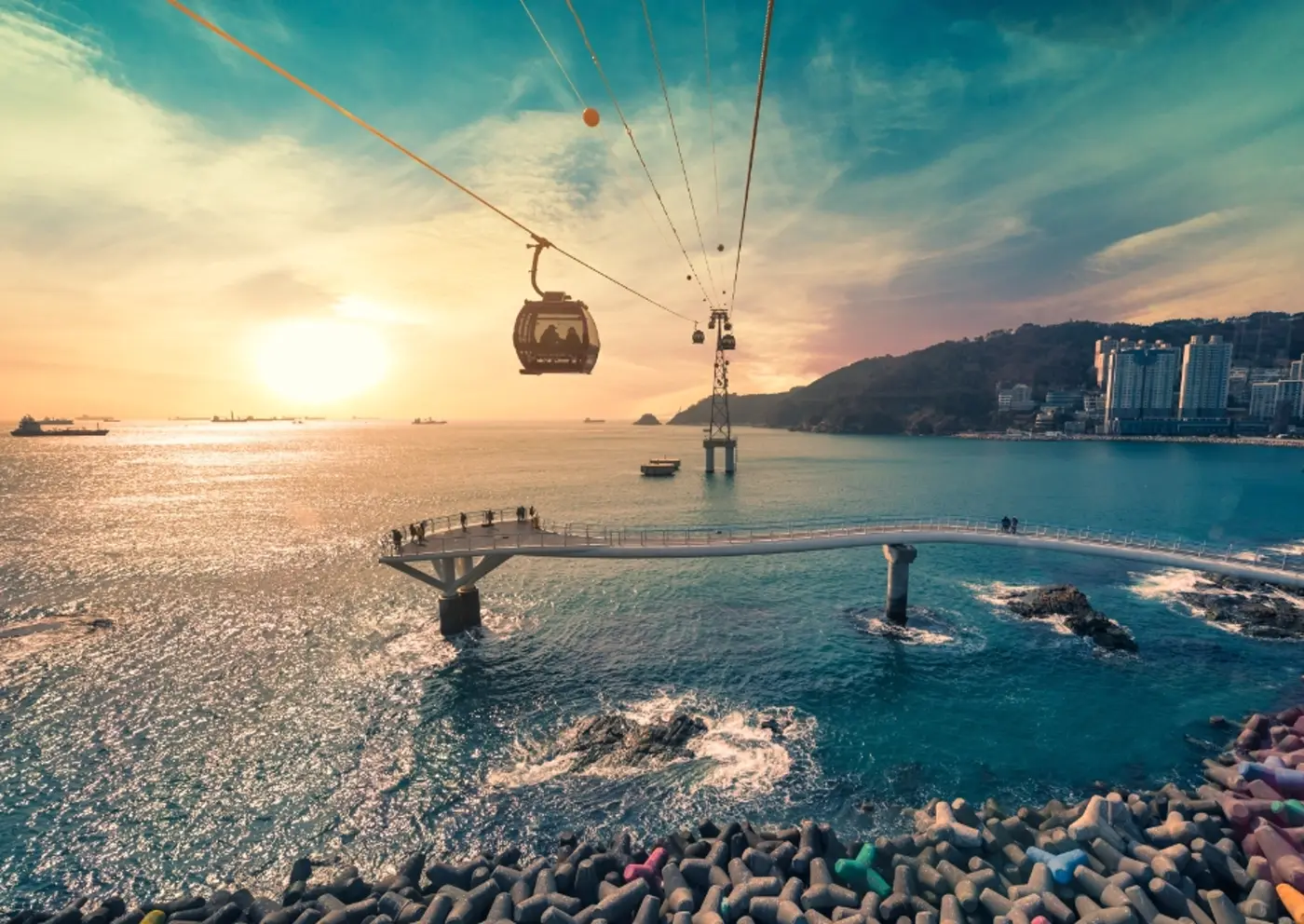
The useful answer: The best Gwangalli evening is not an endless coastal walk. Split it into sunset, the bridge lights, dinner and the trip back to your base. Sunset shifts with the season and the sea breeze becomes more noticeable after dark. A beach base is easiest for a slow view; a subway base is easier when dinner is late or the next day crosses Busan.
Three different parts of the evening
Before sunset, you are choosing a view and reading the water. The short period after sunset is when the sky changes and the bridge begins to stand out. Later, the light is fully artificial, the wind feels sharper and the dinner crowd is moving. Do not use a midday walking estimate for all three. On arrival, locate the beach exits, restrooms and the route back to rail before extending the walk.
If the group only wants the bridge, staying near the middle of the beach is enough. A longer side walk can add another angle, but make the restaurant your limit. Families, older travellers and anyone sensitive to wind will enjoy a shorter shore section followed by an indoor meal more than a forced full promenade.
Season changes the order
Spring evenings can feel cool after the sun drops, so move from the beach to a warm room soon after the bridge view. Summer gives you more light and a pleasant breeze, but humidity and crowds grow; enter a restaurant earlier if a window seat matters. Autumn offers soft light for a longer shoreline section, while weekends require extra time for crossings and queues. Winter has an early sunset and a fast drop in comfort, so decide the viewpoint and the subway exit before you arrive, then go indoors rather than chasing one more angle.
Check sunset, rain and wind before leaving. A direct wind off the water can feel much colder than the city streets. When your phone, hat or hands become difficult to manage, turn back. Missing a kilometre of promenade does not remove the bridge lights; keeping enough energy for dinner and the return is the better choice.
Walking, rail and the last transfer
The beach is pleasant on foot, but the time to a rail station changes with crowds, crossings and small slopes. Put the farthest walk before sunset, then move towards the restaurant and the nearer exit after the bridge lights come on. If dinner is booked, note the restaurant and its nearest exit before you enter the beach; do not discover the connection from the opposite end after the meal.
A beach hotel gives you a simple walk home, but you should also consider noise and the morning route. A base near a subway station may require one more walk after dinner but makes Haeundae, Nampo or Busan Station easier the next day. The right base is about the next transfer you want to avoid, not only the straight-line distance to the water.

A calm evening sequence
Arrive about forty-five minutes before sunset. Read the wind, choose a place, and stay there for the colour change and the first bridge lights. Walk one side of the shore only as far as the restaurant requires, eat, and leave through the planned exit. If rain starts, remove the second walk and keep the view plus dinner. Sunset cannot be delayed for a late arrival, which is why this order is more forgiving than eating first.
You can add a café or another viewpoint, but ask what it costs in dinner choice and return time. Gwangalli benefits from a little empty space. Let the hotel decision support the route: a beach room removes one transfer tonight, while a subway room gives more flexibility tomorrow.
Choose your version
For sunset and bridge lights, use the middle beach, a short walk and an early meal. For shoreline photos, put the long section before sunset. For wind or rain, stay near the entrance and replace the promenade with an indoor dinner. CTA: check sunset and wind first, choose either the beach or subway base, and add no more than one post-sunset walking section before dinner.
Make the bridge view the protected block
The most dependable evening starts on one stretch of beach before sunset and decides about the extension only after the bridge lights appear. If the wind rises, going straight indoors does not weaken the plan. If everyone still has energy, walk toward the nearer exit rather than committing to the far end. Confirm the restaurant, subway entrance and taxi pick-up point before the sky darkens, so every extra block remains a choice instead of a race back.

Let tomorrow choose the room
If the next morning points to Haeundae, a room on the Gwangalli subway corridor removes a return trip. If you are leaving toward Nampo, Jagalchi or Busan Station, a transfer-friendly base can be more useful than a first-row beach view. One night centred on the bridge benefits from a beachfront room because the walk home is simple; two nights with several districts benefit from a subway base because luggage and line changes stay manageable. Choose tomorrow’s direction first, then use the stay CTA to compare the right base.
KriNavi decision card
Best use of this page: Busan Gwangalli After Sunset: Timing, Wind and the Right Base
Core judgement: Plan Gwangalli after sunset around light, wind, walking distance, the subway and a comfortable return to your base.
This card only reorganizes sources already listed by the page. Recheck live hours, prices, service, and restrictions for the travel date.