
KRINAVI TRIP FIT
KRINAVI Trip Fit
75/100For the travel scenario described here, KRINAVI Trip Fit is 75/100. Apsan Observatory is free, but the cable car can buy back climbing effort and make an evening return more controllable. Walk if the mountain itself is the point; consider the cable car only when sunset views matter and the final descent is confirmed.
- Time efficiency65/100
- Route fit75/100
- Planning flexibility85/100
- Weather resilience60/100
- Crowd control75/100
- Value for cost90/100
Each dimension translates this scenario’s time, route, booking flexibility, weather, crowd, and cost into five-point steps; the total is their visible mean.
Check before departure:Address the lowest dimension first — “Weather resilience” (60/100) — and recheck the live limits in this guide’s sources before departure.
The short answer: Apsan Observatory is worth the effort when you want Daegu’s city lights to be the main event of your evening. But do not start by asking whether the cable car is “worth the ticket.” Apsan Park and the observatory are free. The cable car sells something else: less uphill effort, more usable sunset time, and a more predictable way down. If you have daylight, good shoes and actually want a mountain walk, you do not need to pay for it. If you have one evening and do not want to negotiate a dark descent, check the cable car first.
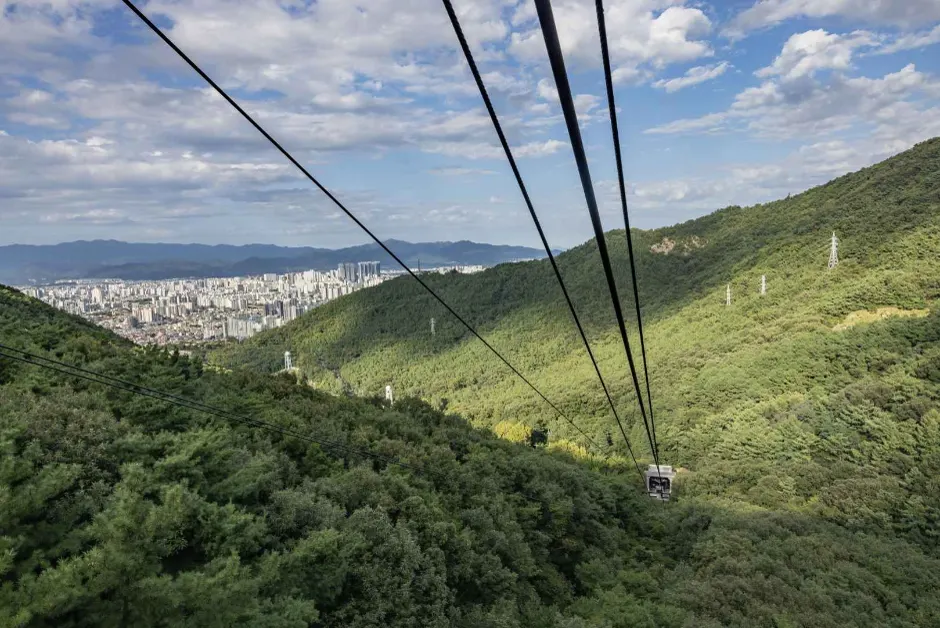
- Daylight, good energy, and you want a walk: the park and observatory are free. Walking can be the experience, not a compromise.
- Sunset, night views, limited time, or companions who do not want a climb: the cable car can protect your time and descent. Check the day’s final service before travelling there.
- Rain, low cloud or poor visibility: do not go up simply because you have reached the station. A cable car shortens the route; it cannot make a skyline appear through cloud.
- Only one day in Daegu: make Apsan the evening’s main direction. Do not spend the day zig-zagging to other distant sights and expect sunset to stay flexible.
The park and observatory are free. The cable car is a separate decision.
That distinction matters. Official tourism information describes Apsan Park as free to visit, while the cable car is a paid facility. You may see different fares in official pages from different update periods: one newer listing shows KRW 14,000 return and KRW 10,000 one way for adults, while other official material still shows older figures. Treat no historic fare as a promise. On the day, check the operator’s current price, last service and weather notices.
So “free attraction” does not mean zero cost. You are still choosing whether to spend your legs, exchange money for time, or change to a city-centre evening because the weather has made the view a poor bet. The difficult version of this plan is arriving near sunset, discovering that the cable car window is too tight, and having neither the light nor the appetite for a walk down.
Before you chase the view, answer three questions: What is the latest time you can go up? What is the final descent service today? If operations stop, are you and your companions happy to walk down, take a taxi after changing plans, or leave Apsan altogether? If those answers are unclear, visit in daylight rather than stacking dinner, transit cut-offs and night views into one fragile evening.
Who should walk up for free?
You want the mountain, not only the photo.
Apsan is a natural park. A free walk makes sense when the trees, slope and pauses are part of what you came for. If you have daylight, suitable footwear and companions who want to walk, the cable car does not automatically improve the day.
You have two days in Daegu.
With two days, Apsan can be a daytime plan rather than an all-or-nothing night-view mission. Save another evening for Dongseong-ro, Suseong Lake or dinner. You will not have to make every choice depend on the same last ride down.
You can let weather change the answer.
The view is the product. Low cloud, rain or strong wind may make both the walk and the ride poor value. A paid ticket should not turn into a sunk-cost decision just because you have already reached the base.
Who should consider the cable car?
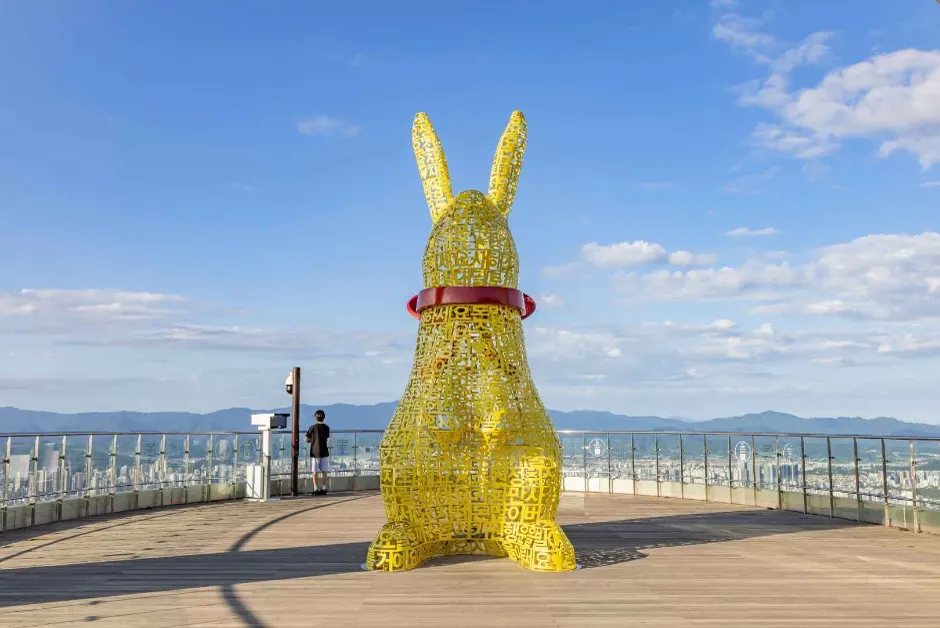
Night view is the reason you chose Apsan. A cable car leaves more time at the observatory instead of spending it on the climb, provided you have checked operating hours. Official visitor information warns night-view visitors to verify the final service, and some notices state that rain can cause earlier suspension.
Your companion does not want a long slope or a descent after dark. This is the cable car’s practical value. It is not a premium viewpoint: once you reach the observatory, everyone is looking at the same city. What you are paying for is a manageable way up and, crucially, down.
You have one evening and Apsan fits its direction. Getting from central Daegu to the cable-car base and then back to dinner or your hotel still takes time. The cable car reduces uncertainty on the mountain section; it does not erase the rest of the city journey.
Do not mistake a five-minute ride for a five-minute outing
Older district information describes a roughly 795-metre, five-minute one-way ride. That is the time inside the cabin, not the whole outing. Add the journey from your accommodation, ticketing or queues, the walk from the upper station to the view, time at the platform, the descent and the transfer back. Daegu tourism information also gives example routes that combine subway or bus with a walk of around ten minutes to the cable-car entrance. Use these as planning scale, not as a guarantee of today’s service.
When should you skip Apsan?
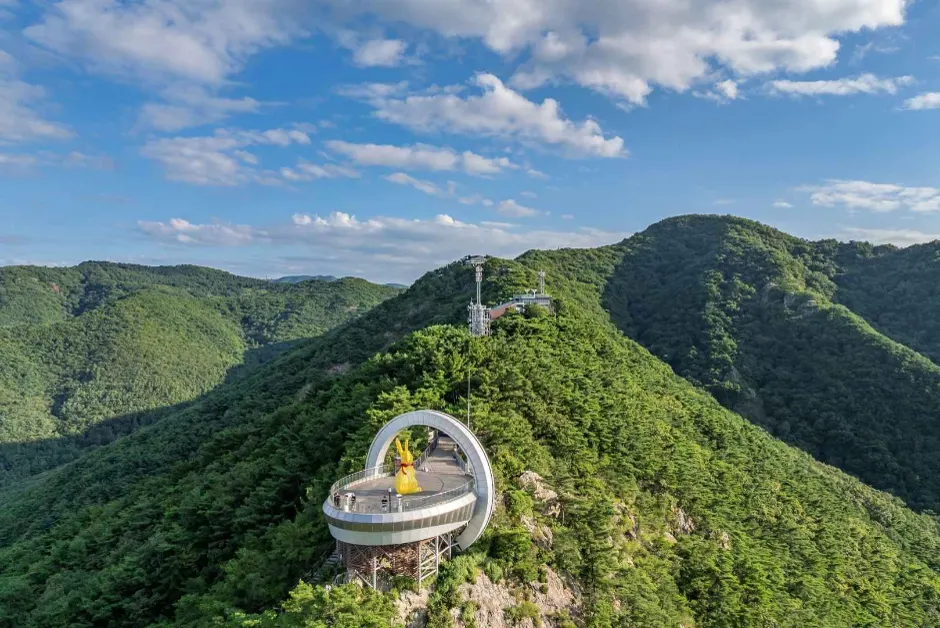
Skip it if you have only half a day, visibility is already poor, your companions do not care about night views, or dinner and a train create a hard deadline. A city view is not Daegu’s only evening option. A relaxed dinner and a central walk can be better than trying to beat the last service down a mountain.
Also avoid using “the park is free” as a reason to visit during the day and then return again for the night. Free admission does not remove the cost of a repeated cross-city journey.
Seven checks before you leave
- Do you want a mountain walk or a night view? They can lead to different plans.
- What are today’s weather and visibility like? Cloud, rain and wind affect both the view and operations.
- What is today’s final ascent and descent? Use the operator’s current notice, not an old blog.
- Is the displayed fare current? Official tourism pages can preserve earlier pricing.
- What is the fallback if service stops? Decide between taxi, walking or a city-centre evening before you go.
- How comfortably can everyone handle slopes and uneven ground? “Observatory” does not mean a flat walk.
- Where are you going after Apsan? Leave time for dinner, subway connections or a train back out of Daegu.
Walk for free if you have daylight, want the mountain itself, have the energy and the weather is worth it. Use the cable car if sunset is the evening’s main event, your group does not want the climb, and you have verified both the weather and final service. Skip it today if visibility is poor, your evening is locked by dinner or transport, or “free” is the only reason it remained on the list. Apsan does not need a forced booking link to be worthwhile; it needs a plan that lets you get back without rushing.
Put Apsan into an evening that does not double back
If you have not yet chosen which side of Daegu anchors your day, return to the Daegu guide hub. With one day, use the Daegu one-day itinerary to lock in two compatible directions first. If you are travelling without a car and want to preserve an evening view, read the car-free Daegu guide before treating Apsan as a final add-on. This article decides whether Apsan deserves a direction of its own; it does not replace the rest of your Daegu plan.
Practical data before you go: lock the return first
Core facts:Apsan Park and the observatory are free outdoor spaces; the cable car is paid. The ride takes about five minutes, but the city transfer, queue, upper-station walk and descent are separate. Treat the fare, final service, weather suspension and access as date-specific operator information.
How do the four seasons change the answer?
- Spring: use clear visibility for a sunset walk, then decide whether the city lights justify staying after dark.
- Summer: the later sunset helps, but heat and thunderstorms can narrow both the riding and walking window.
- Autumn: air can be good for a skyline, while clear weekends put pressure on sunset positions and queues.
- Winter: darkness comes early and the ridge feels colder; set an earlier final-descent cut-off.
Practical trade-off table
| Your constraint | Do first | You gain | You give up |
|---|---|---|---|
| One evening only | Confirm the final cable-car service before fixing sunset | Keep energy for the observatory | Pay the fare and keep a weather risk |
| A full daylight block | Walk up and make the mountain the half-day | The trail becomes part of the visit | More slope and a less predictable return |
| Cloud, rain or strong wind | Switch to a central dinner and walk | Do not spend the evening on a weak view | The Apsan skyline |
| A companion who cannot manage slopes | Confirm the entrance and upper walk before buying | Remove the longest uphill section | A cable car is not a full accessibility transfer |
FAQ
- Does a five-minute cable-car ride make this a five-minute outing?
- No. Add the transfer, queue, walk from the upper station, viewing time and the descent.
- If the cable car stops, must we walk down?
- Not automatically. Follow the operator’s on-site advice and switch to a taxi or central plan if the safe return no longer fits.
- How does Apsan compare with 83 Tower for a night view?
- Apsan trades indoor convenience for a mountain skyline; 83 Tower is more compact and weather-buffered.
Visitor signals: what works and what can undo the evening
Positive signals
- Visitors repeatedly value the broad Daegu panorama; sunset and city lights give the visit a clear purpose.
- The cable car is often treated as a practical way to avoid the steepest climb when the view matters more than the hike.
- The park, memorial spaces, walking routes and observatory can form one outdoor visit instead of a single photo stop.
- A basic rest or café stop near the upper area makes arriving before sunset more manageable.
- Quieter weekdays are frequently described as better for an unhurried view and short walk.
Limits and counter-signals
- The bus stop or parking area is not the cable-car platform; the approach can still include an uphill walk.
- Parking is not guaranteed beside the station, so the last stretch can cost more effort than the map suggests.
- Popular sunset positions can involve waiting, which matters when the final descent is close.
- A cable-car arrival does not remove the walk from the upper station to the viewing area.
- Wind can make the ride uncomfortable and can affect operations, so a ticket cannot remove the weather risk.
These are synthesized visitor signals rather than copied comments. The score remains an editorial route decision, not a venue rating.
Checked: 2026-08-23. Free access to Apsan Park and observatory, location details and cable-car visitor information were cross-checked against and Daegu tourism sources. Operating times and fares appear in materials from different update periods, so this guide treats only these as stable: the park is free, the cable car is paid, and service can change with season or weather. Confirm current operator information on the travel date.
| Apsan Cable Car and Observatory · | Apsan Cable Car · Daegu Tourism | Apsan Observatory · DaeguTour | Apsan access overview
KriNavi decision card
Best use of this page: Is Apsan Observatory Worth It? Free Walking or Cable Car for Daegu Night Views
Core judgement: Apsan Observatory is free; the cable car buys back uphill time. Compare sunset, weather, final service and central Daegu routes before choosing.
Sources checked in this page: Source 1 · Source 2 · Source 3 · Source 4
This card only reorganizes sources already listed by the page. Recheck live hours, prices, service, and restrictions for the travel date.