

Short answer: Daegu Arboretum is more useful as a restored-ecology decision than a plant checklist. The city describes a municipal arboretum created on a former landfill site, with themed gardens, ponds, trails and grassy areas. Choose learning, walking or family rest according to heat, season, mobility and attention. Current hours, access, transport, weather, facilities, programmes and reservations are to be checked.
- the group wants restoration learning, plants, family rest or a calm walk
- shade, heat, surface and rest points fit the least confident visitor
- current hours, access, transport and programme details are checked
- the visit remains meaningful without naming every plant
What is the real choice?
Daegu Arboretum is more useful as a restored-ecology decision than a plant checklist. The city describes a municipal arboretum created on a former landfill site, with themed gardens, ponds, trails and grassy areas. Choose learning, walking or family rest according to heat, season, mobility and attention. A Daegu traveller wants a green day but must decide whether to study ecological restoration, wander themed gardens, give children open space or use the arboretum as a short city escape. The route is a decision about attention, effort, evidence and the right to change plans. Daegu Arboretum is strongest when the former landfill recovery story controls the visit. Choose restoration, plants or family rest as the anchor, check current heat and access details, and let a smaller route carry more meaning than a rushed botanical checklist.
Route and decision table
| Route | Choose it when | Suggested sequence | Trade-off |
|---|---|---|---|
| Restoration-learning route | The group wants the former-landfill recovery story and themed gardens. | Begin with current interpretation, choose connected gardens and pause where the ecological change is legible. | You gain context but move more slowly and cover fewer lawns. |
| Garden sampler | The group wants varied plants, ponds and a manageable walk. | Select a small set of confirmed gardens, set a shade stop and turn back before heat or fatigue. | You gain variety but sacrifice a complete botanical survey. |
| Family green break | Children need open space, simple goals and a flexible duration. | Choose a short path, rest area, current facility and meeting point, then let interest decide the extension. | You gain inclusion but the restoration story may stay brief. |
| Daegu base visit | The arboretum is one calm chapter within a city itinerary. | Check the subway or bus approach, room location and next-day route before adding other stops. | You gain urban flexibility but must manage cross-city transfers. |
Visit the restoration story before the checklist
Daegu’s English city page explains that the municipal arboretum was developed on land used as a sanitary landfill and restored into botanical gardens, ponds, groves and trails. That history gives the place a stronger decision than “How many plants can we see?” It invites visitors to notice change, maintenance and the relationship between city and ecology.
Choose the group’s lens before entering. A student may want restoration and plant names. A family may need movement and shade. A traveller recovering from a dense city itinerary may want a quiet garden. Each lens can be valid without claiming the whole site.
A garden route needs a heat and mobility plan
An arboretum may look easy because paths are designed, but heat, distance, exposed lawns, wet surfaces and the absence of a seat at the exact preferred view can change the day. Check current maps, rest areas, shade, water and facilities, and design for the slowest person.
A hub-and-spoke route often works better than a complete loop. Meet at a confirmed point, choose one garden cluster and let the group stop without apology. A short green experience is a complete route when it matches the reason for visiting.
Read plants as part of a living system
Themed gardens and ponds encourage photographs, but the best visit also notices what is growing, what is shaded, where water sits and how the landscape has been maintained. Do not touch, pick or climb. Follow current signs and keep paths clear for other visitors.
If the group is interested in plant identification, choose a few examples and verify names from current interpretation. A long list copied from an old page is less useful than a smaller set that the traveller actually understands.
Families need choice, not a botanical exam
Children may enjoy open grass, water, insects, colour or a simple mission more than a long explanation. Adults may want the restoration story. Build one shared anchor and allow optional exploration within a defined boundary. This gives everyone ownership of the day.
Check current facility rules, toilets, shade, stroller or mobility information and weather. Do not promise a playground, programme or picnic arrangement unless the current source confirms it. Unknown details stay to be checked.
Transport and accommodation should protect the green break
Daegu is a large city, so the approach matters. Check the actual subway, bus, walking and taxi sequence, including the return after heat has reduced energy. A map line may hide a long exposed walk or a transfer that is difficult with children.
A room near the next confirmed route can be more valuable than one marketed as close to the arboretum. Check price, parking, check-in, cooling, breakfast and onward transit. A day visit may still be the simplest answer for a well-connected group.
Use seasons as observation prompts
Spring can invite growth and flower attention, summer rewards an early shaded plan, autumn changes the tree structure and winter makes a short route more realistic. None is a universal best time. Check current displays, weather, maintenance and opening.
If a flower is late or a lawn is closed, keep the restoration and garden decision honest. Remove the display promise, not the entire value of the place. The arboretum can teach visitors how landscapes change.
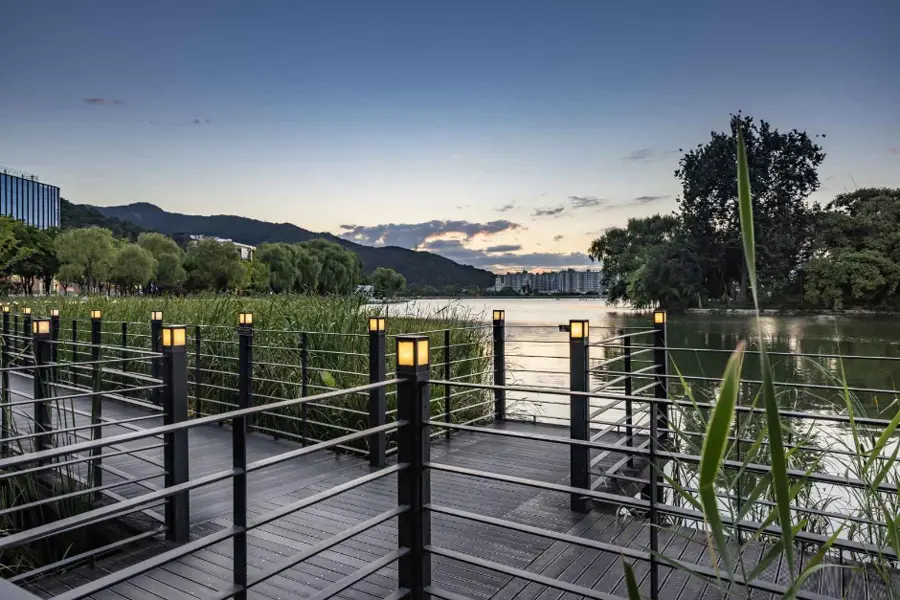
Leave with a smaller, better question
Ask what the city recovered, what the group noticed and which route detail made the visit comfortable. Those questions create a useful memory even when the garden is busy or the weather is plain.
A complete Daegu Arboretum plan has an anchor, an optional extension and a safe exit. It does not require every themed space. The point is to give urban nature enough attention to be understood.
Evidence notes for this decision
Route evidence note — Restoration-learning route: choose this when The group wants the former-landfill recovery story and themed gardens. The practical sequence is Begin with current interpretation, choose connected gardens and pause where the ecological change is legible. The trade-off is You gain context but move more slowly and cover fewer lawns. Keep live access and operating details to be checked.
Route evidence note — Garden sampler: choose this when The group wants varied plants, ponds and a manageable walk. The practical sequence is Select a small set of confirmed gardens, set a shade stop and turn back before heat or fatigue. The trade-off is You gain variety but sacrifice a complete botanical survey. Keep live access and operating details to be checked.
Route evidence note — Family green break: choose this when Children need open space, simple goals and a flexible duration. The practical sequence is Choose a short path, rest area, current facility and meeting point, then let interest decide the extension. The trade-off is You gain inclusion but the restoration story may stay brief. Keep live access and operating details to be checked.
Route evidence note — Daegu base visit: choose this when The arboretum is one calm chapter within a city itinerary. The practical sequence is Check the subway or bus approach, room location and next-day route before adding other stops. The trade-off is You gain urban flexibility but must manage cross-city transfers. Keep live access and operating details to be checked.
Season evidence note — Spring: the opportunity is Fresh growth and flowers can support plant observation and a comfortable start. The constraint is Rain, pollen, school groups and changing garden displays alter the pace. Before leaving, Check current hours, programme, bloom condition, weather and shade. This is a planning prompt, not a forecast.
Season evidence note — Summer: the opportunity is An early visit can use green spaces before Daegu heat builds. The constraint is Heat, humidity, insects and exposed lawns make a long walk costly. Before leaving, Check heat warnings, water, shade, facilities, transport and last entry. This is a planning prompt, not a forecast.
Season evidence note — Autumn: the opportunity is Clearer weather and changing leaves can make a slow garden route persuasive. The constraint is Weekend demand and shorter daylight reduce flexibility. Before leaving, Check current displays, crowds, weather, opening and return. This is a planning prompt, not a forecast.
Season evidence note — Winter: the opportunity is A short structured visit can give an urban trip a quieter green chapter. The constraint is Bare gardens, cold wind and reduced outdoor comfort make a broad circuit less attractive. Before leaving, Check current indoor areas, hours, clothing, surfaces and warm fallback. This is a planning prompt, not a forecast.
Positive signal: The group can explain whether restoration, plants, family rest or walking leads. Evidence should be current, specific and tied to the group’s actual route.
Positive signal: Current opening, access, transport and programme details are checked. Evidence should be current, specific and tied to the group’s actual route.
Positive signal: The route includes shade, water, rest and a shorter option. Evidence should be current, specific and tied to the group’s actual route.
Positive signal: Visitors treat plants, ponds, lawns and habitats as shared living spaces. Evidence should be current, specific and tied to the group’s actual route.
Positive signal: The arboretum remains valuable even when a flower or display is not at its peak. Evidence should be current, specific and tied to the group’s actual route.
Limitation signal: The former landfill story is used as a slogan without reading current interpretation. If this appears, shorten the promise or stop and verify.
Limitation signal: A long exposed walk is planned during Daegu heat. If this appears, shorten the promise or stop and verify.
Limitation signal: Every garden section is promised to a family with different energy levels. If this appears, shorten the promise or stop and verify.
Limitation signal: Plants or habitat areas are touched, climbed or treated as photo props. If this appears, shorten the promise or stop and verify.
Limitation signal: A city hotel and arboretum transfer is assumed easy without checking transit. If this appears, shorten the promise or stop and verify.
Four seasons at a glance
Seasonal trade-offs
| Season | What becomes attractive | What becomes harder | Check before committing |
|---|---|---|---|
| Spring | Fresh growth and flowers can support plant observation and a comfortable start. | Rain, pollen, school groups and changing garden displays alter the pace. | Check current hours, programme, bloom condition, weather and shade. |
| Summer | An early visit can use green spaces before Daegu heat builds. | Heat, humidity, insects and exposed lawns make a long walk costly. | Check heat warnings, water, shade, facilities, transport and last entry. |
| Autumn | Clearer weather and changing leaves can make a slow garden route persuasive. | Weekend demand and shorter daylight reduce flexibility. | Check current displays, crowds, weather, opening and return. |
| Winter | A short structured visit can give an urban trip a quieter green chapter. | Bare gardens, cold wind and reduced outdoor comfort make a broad circuit less attractive. | Check current indoor areas, hours, clothing, surfaces and warm fallback. |
Five positive evidence signals
- The group can explain whether restoration, plants, family rest or walking leads.
- Current opening, access, transport and programme details are checked.
- The route includes shade, water, rest and a shorter option.
- Visitors treat plants, ponds, lawns and habitats as shared living spaces.
- The arboretum remains valuable even when a flower or display is not at its peak.
Five negative evidence signals and limitations
- The former landfill story is used as a slogan without reading current interpretation.
- A long exposed walk is planned during Daegu heat.
- Every garden section is promised to a family with different energy levels.
- Plants or habitat areas are touched, climbed or treated as photo props.
- A city hotel and arboretum transfer is assumed easy without checking transit.
Three practical route shapes
Restoration anchor: Begin with the ecological story and let plant variety follow.
Shaded garden route: Choose fewer themed areas with a real rest rhythm rather than a full loop.
Family green break: Use a short route, open space and meeting point, then extend only if the group wants it.

Accommodation and transport decision
| Stay shape | Choose it when | Trade-off |
|---|---|---|
| Daegu city base | Choose this when the arboretum is a daytime nature chapter in a larger city trip. | Best for transport and food variety, but adds cross-city travel. |
| Near-route room | Choose a current room when an early start, heat recovery or the next day’s west-Daegu plan matters. | More convenient, but location, cost, parking and check-in are to be checked. |
| Day visit | Choose this when a reliable train or subway plan makes the green break easy. | Lower cost, but less tolerant of weather or late changes. |
Field decisions before leaving
- Daegu city English Arboretum page — operating details and access are to be checked.
- DaeguTour English Arboretum map page — operating details and access are to be checked.
- Daegu official tourism portal — operating details and access are to be checked.
- Daegu Metropolitan City portal — operating details and access are to be checked.
Let the garden decide the night before
Daegu Arboretum is a slow, weather-sensitive stop. The useful hotel choice is the one that leaves energy for the paths, not the one that looks closest on a map.
Daegu Marriott Hotel
Use it when the arboretum is paired with Dongdaegu arrival or departure. A strong station-side base keeps the long transfer to the garden in one direction and makes an early train or a late return less stressful.
See Daegu stay optionsDongseong-ro city base
Choose the centre if you want the garden as a half-day reset between modern alleys and market food. It gives more evening choices, while the garden visit should start earlier to leave room for the ride back.
Browse the city baseStation-side for rail days; centre for a city-and-garden split.
FAQ
Why is the former landfill history important?
It changes the visit from a list of plants into a chance to understand urban restoration, as described by the city.
Is Daegu Arboretum suitable for children?
It can be with short goals, shade, open space, rest and a meeting point rather than a forced long circuit.
Are all plants or gardens at their best year-round?
No. Season, maintenance and weather change what is visible, so check current conditions.
Can I bring food or picnic?
Check current rules, facilities, waste guidance and any restricted areas before planning a meal.
Should I stay near the arboretum?
Choose a current room only when it reduces a real early-start, heat or onward-route problem.
What if it is too hot?
Start early if confirmed, shorten the outdoor route, use shade and remove optional gardens first.
KriNavi decision card
Best use of this page: Daegu Arboretum Route Decision: Botanical Checklist or Restored Ecology Day?
Core judgement: Choose Daegu Arboretum by restored-landscape learning, garden walking, heat, seasons, transport, family pace and a city base.
Sources checked in this page: Source 1 · Source 2 · Source 3 · Source 4
This card only reorganizes sources already listed by the page. Recheck live hours, prices, service, and restrictions for the travel date.