
Short answer: Do not treat Jangheung Jeongnamjin as one waterfront you can clear in a single walk. Pick one protected chapter first: a South Sea viewpoint, a cypress-forest recovery day, or the town market. Add a second landscape only when the transfer, weather and return still fit the group.
- Choose the coast: Protect the Jeongnamjin viewpoint, sea horizon and late light. Keep the forest for another day.
- Choose the forest: Use Cypress Forest Woodland for shade, wood culture and a slower middle of the day. Treat the coast as optional.
- Choose the town: Build around the Saturday Market, a local meal and a short riverside walk. This is the least exposed version.
- Choose the festival: On a water-festival date, plan around the event zone, wet clothes, crowds and the journey home rather than copying a quiet coast route.
Why the map needs a decision before a timetable
Jeongnamjin is a county-scale landscape. The sea, the observatory area, Cypress Forest Woodland, Cheongwansan and Jangheung town do not behave like neighbouring neighbourhoods. A map may make the lines look simple, but every extra crossing consumes daylight, parking time, road attention and energy. The useful question is not how many names fit on the page. It is what the group wants to remember when one connection is slow or the horizon disappears.
The coast gives a strong sense of direction: open water, islands, wind and a visible end point. The forest gives a protected pause when the sun is harsh or the group needs quiet. The market gives a grounded reason to stay in town and eat locally. These experiences support one another only when their speeds are respected. A coast stop is shaped by visibility and light; a forest stop is shaped by shade and walking; a market stop is shaped by the day and the individual shops.
Three route shapes that can actually finish
| Route | Suggested sequence | Best for | What you give up |
|---|---|---|---|
| Coast-led day | Arrive in Jangheung → confirmed Jeongnamjin viewpoint → coastal pause and meal → return before the road darkens | First-time visitors who want the South Sea to be the main memory | The forest becomes a separate visit; do not force it into the same afternoon. |
| Forest-led day | Town breakfast → Cypress Forest Woodland → wood or therapy-forest chapter → town dinner | Families, older travellers and anyone needing shade or a slower pace | The distant horizon is less important than recovery and time in one place. |
| Market and coast contrast | Saturday Market in the morning → rest and transfer → short coast viewpoint near the best light | Travellers who want food and one clear sea chapter | The market date and the late transfer control the whole day. |
| Water-festival day | Confirmed event entrance → water programme → dry change and meal → planned exit or town stay | People who want participation rather than a quiet landscape | Noise, wet clothing, queues and road controls reduce improvisation. |
Coast first: make the viewpoint earn its place
Start with the sea when a wide horizon is the reason for coming. Go while there is enough daylight to read the road, the walking surface and the wind. A viewpoint is not simply a photo stop: it is an exposed place where visibility, gusts, rain and the group's comfort affect the value. Give the coast a protected time box, then decide whether the group still has appetite for a second chapter.
At the shore, keep working areas clear. Harbours and coastal roads serve boats, deliveries and residents as well as visitors. Do not step over ropes, touch gear or use a busy loading edge as a viewpoint. If the wind makes conversation difficult or the path becomes slick, turn the coast into a shorter success rather than chasing a more dramatic angle. A calm meal and an early return are a better ending than an anxious final drive.
Forest first: use Woodland as the middle of the day
Cypress Forest Woodland works when the group needs a change of texture after a long arrival or a bright coast. It offers a reason to slow down: tall trees, wood-related spaces, shaded paths and places to sit. The forest does not need to be sold as a cure. Its practical value is that it gives the itinerary a comfortable centre where walking can be shortened without cancelling the day.
Choose one clear forest purpose. A short shaded walk suits a group that has a late arrival; a longer programme suits travellers who are willing to give up the far coast. Keep bags light, wear shoes that cope with damp ground and leave room for a meal or warm drink. If a programme or facility is unavailable, the forest atmosphere and a shorter public path should still be enough to support the decision.
Market first: let the town control the pace
Jangheung Saturday Market is a good anchor for travellers who want the county as a living place rather than a sequence of lookouts. The name matters: plan it for the relevant day and treat each shop, stall and performance as its own current detail. Arrive with time to eat, browse and pause instead of using the market as a ten-minute refuelling stop before a distant coast.
A market-led route is especially useful when rain, heat or a slow transfer has already reduced the day. Add only a nearby riverside or town walk after the meal. If the group still wants the sea, choose one confirmed late-light viewpoint and remove the forest. The market remains a complete reason to be in Jangheung even when the coast is hidden.

Transport trade-offs: the last connection is part of the route
From Mokpo, Suncheon or another southern base, the first transfer into Jangheung already sets the shape of the day. Once inside the county, local buses may not line up with a viewpoint, a forest entrance and a market's useful hours. A taxi can save a long wait, but its value depends on the actual road distance, traffic, meeting point and the driver's ability to reach the chosen entrance. Agree the next destination before boarding and keep the accommodation address available for the return.
Driving gives the most freedom between dispersed chapters but adds parking, fatigue and the temptation to keep crossing the county. If anyone in the group will drive after sunset, drop the farthest optional stop first. Without a car, concentrate on one area and book or confirm the return before leaving a quiet viewpoint. Water-festival traffic can change this equation completely; use the event's current access plan and do not assume a normal evening bus.
Four seasons, four different Jangheung days
| Season | Good use of the route | Pressure point | Plan around |
|---|---|---|---|
| Spring | Pair fresh forest growth with a clear coast chapter and an unhurried town meal. | Rain, wind and soft ground can change walking comfort. | Visibility, rainfall, footwear, opening hours and the return. |
| Summer | Use long light for the coast or choose the water programme when the group wants activity. | Heat, storms, wet clothes, crowds and event traffic make a packed route fragile. | Shade, water, changing space, event access and a cool place to finish. |
| Autumn | Use clearer air for the coast, or a forest and mountain contrast when the group prefers texture. | Weekend demand and shorter daylight make distant transfers expensive. | Sunset, road time, accommodation demand and a firm turnaround. |
| Winter | Choose a compact coast look or a town-and-forest day with warm pauses. | Wind, early darkness and reduced services narrow the safe margin. | Daylight, heating, food, road conditions and the final ride. |
Where to sleep: choose the next morning, not just tonight
Two useful bases for this route
Jangheung city stay
Choose a city base when the plan includes the Saturday Market, a town dinner or a morning transfer. It keeps food and the next connection close, and it lets you shorten a coast day without being stranded at a remote viewpoint.
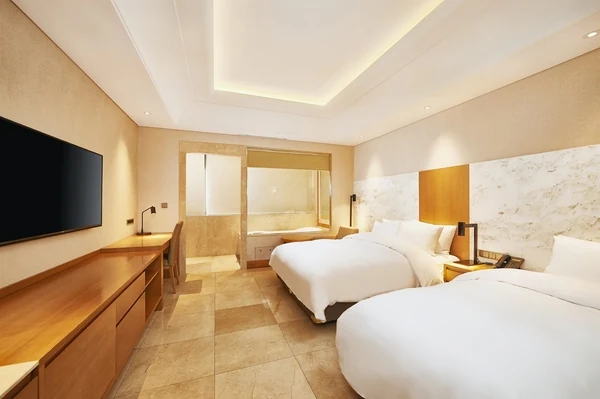
Choose a Jangheung baseJeongnamjin or Woodland-area stay
Choose a confirmed coastal or Woodland-area room when the following morning starts with the sea or forest. The benefit is an earlier, quieter first chapter; the trade-off is fewer evening choices and a stronger need to arrange meals and the return before arrival.
Compare rooms for the routeStay in town for flexible meals and transfers; stay near the coast or forest when an early start is the reason for the trip.
FAQ
Can I see the coast, forest and market in one day?
It is possible only with a car, favourable timing and a willingness to make each stop short. For most groups, choose two chapters at most and let one be the clear anchor.
Is Jangheung suitable without driving?
Yes, when the route is concentrated. Use the town or one forest/coast base, arrange the return before setting out, and do not assume a taxi will appear immediately at a quiet viewpoint.
Should I visit during the Water Festival?
Visit when the programme itself is what you want. Expect a different day: wet equipment, crowds, changed roads and a planned exit matter more than a scenic loop.
What is the best season?
Spring and autumn are comfortable for mixed coast and forest days; summer suits water activity if heat and storms are managed; winter rewards compact routes with an early finish.
What should the hotel save me?
A good base should save a transfer that would otherwise steal the next morning, or give the group a practical recovery point after the coast. Choose for the route, not a generic room list.

A practical day with room to change
For a coast-led arrival, use the first part of the day to get into Jangheung and settle the next move instead of promising a distant viewpoint before anyone has eaten. Once the group reaches the chosen coast chapter, pause long enough to understand the place. Look at the direction of the shore, the wind, the road, the working edges and the route back. If the sea is clear, the group can stay for the planned view. If visibility is poor, move the focus to the shape of the coast, the harbour rhythm or a short walk rather than spending the remaining daylight searching for a better photograph.
A forest-led day benefits from the opposite order. Arrive in town, take the easiest meal of the day first, then go to the cypress area while the group still has energy for a measured walk. A shaded route can feel effortless at the entrance and tiring after an hour, especially for a traveller carrying a camera or for a child who has been sitting in a car. Mark a chair, a toilet and a point where the route can turn around. These are not interruptions; they are what make the forest a usable travel experience.
For the market route, do not treat lunch as a gap between attractions. Let the market establish the day's pace. Choose one or two foods, look at the surrounding street and give the group time to finish before deciding whether a coast transfer still makes sense. If the meal runs late, keep the town chapter and drop the far viewpoint. A traveller who has eaten well and understood where they are will remember more than a traveller who raced from a market stall to a dark lookout.
When the group has different priorities
Mixed groups are common in Jangheung. One person may want an exposed horizon, another may prefer shade, and a third may care most about a local meal. Solve this at the route level. Keep the first anchor shared, then create a short split with a public meeting point, a fixed time and a clear way back to the room. Someone who skips the mountain or the water activity should be able to spend a worthwhile hour in town, not simply wait beside a car.
Mobility also changes the meaning of nearby. A coastal entrance can have a short distance but uneven ground, wind and no convenient seat. A forest can have shade but still include slopes. Describe the actual effort in the itinerary and let the least confident walker set the turnaround. If the route is for a family, put a food and water pause before the point where children usually lose patience. If the group includes a photographer, agree that one person does not hold the whole route at every frame.
Small decisions that protect the South Sea chapter
- Carry a light layer even in warm weather; a sea-facing stop can feel colder when the wind changes.
- Keep a dry bag or simple cover for phones and documents on a water-activity date.
- Use the town for a proper meal before a remote coast transfer, unless the next stop has a confirmed option.
- Do not leave bags in an exposed car while walking a harbour or forest route; bring only what the path needs.
- Save the accommodation address in a form that can be shown without a long explanation when the group needs a taxi.
- Give the final hour a job: return, shower, dinner or a quiet walk. Do not fill it with another distant pin.
These details are deliberately ordinary. They are the difference between an attractive map and a day that works for real people. Jangheung rewards attention to distance and rhythm. Let one landscape speak clearly, let the second one support it, and allow the town to be the place where the trip closes.
KriNavi decision card
Best use of this page: Jangheung Jeongnamjin Coast Day Plan: Choose the Sea, Forest or Market
Core judgement: Build a Jangheung Jeongnamjin day around the coast, Cypress Forest Woodland or Saturday Market, with realistic transfers and a stay that protects the return.
This card only reorganizes sources already listed by the page. Recheck live hours, prices, service, and restrictions for the travel date.