
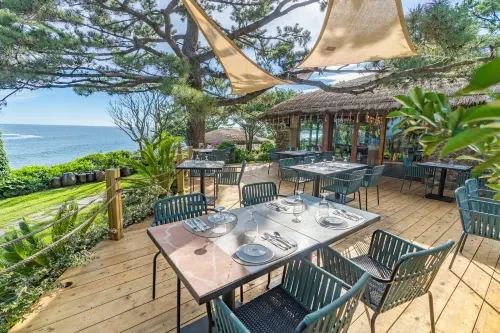
Treat Seopjikoji as a coastal walk that can be shortened. East Jeju does not need Seongsan sunrise, Udo and every nearby shore in one day. Seopjikoji rewards a horizontal route through grass, wind and rock, but the best version may stop near the entrance when the exposure rises. Decide whether the day is about the coast or the next bus before choosing how far to walk.
Why it deserves its own block
Seongsan Ilchulbong is a clear uphill attraction. Seopjikoji is about movement along the coast and changing sight lines. Combining both too tightly can turn the morning into a race between a climb and a headwind, leaving no useful meal or departure buffer. For travellers who do not want two climbs, Seopjikoji works well as a separate east-coast half day, with Seongsan on another morning.
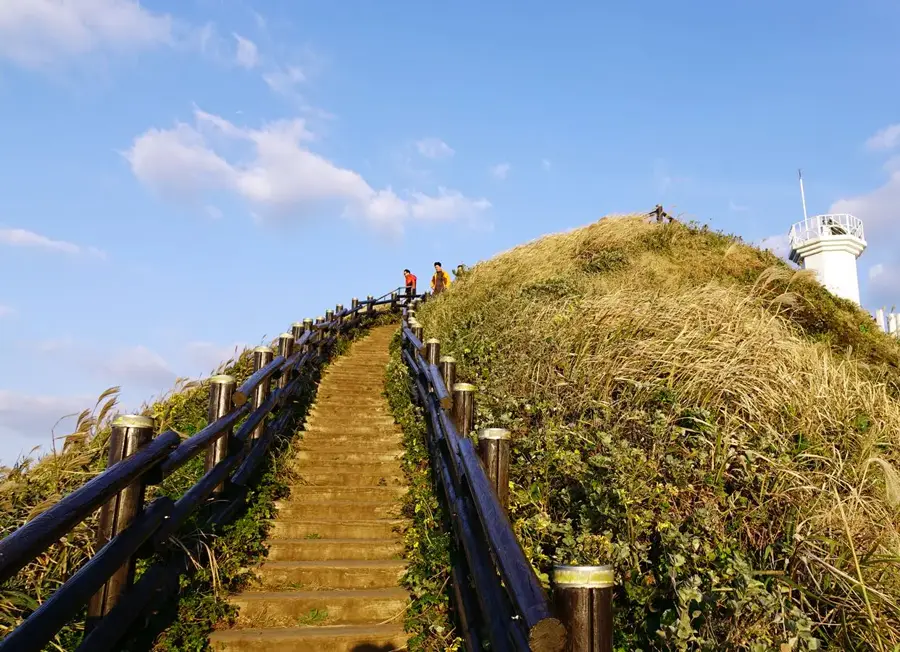
On arrival, read the wind, spray and surface before choosing the outer edge. The sea-facing section can be more exposed than the entrance grass. Grippy shoes matter more than a fast photograph. Set a visible turning point and keep it fixed; a headwind on the return can take longer than the outward walk.
Bus logic without a car
Write down both arrival and departure directions before looking at the internal walking line. If the gap between buses is large, treat that wait as part of the plan rather than hoping the next one will appear quickly. Find the return stop first. Then you can enjoy the coast while knowing the latest safe turnaround time.
From a Seongsan base, place Seopjikoji in the calmer weather window and return for food or a shorter local section. From Jeju City, the round trip consumes more walking time, so remove the second distant attraction. A rental car shortens transfers but does not remove parking, loading and weather decisions.
Deciding under wind and surf
When the wind is light and visibility is clear, use the longer line so grass and rock form one scene. In moderate wind, keep the entrance, the main viewpoint and one protected section; remove the spray-facing branch. In strong wind or heavier rain, stop at a safe viewpoint and move toward food or accommodation. The view is still complete when the route matches the conditions.
Four seasonal versions
Spring grass is gentle in colour but the wind can change quickly, so a shell is more useful than the temperature alone. Summer sun and humidity make early morning or late afternoon best; use midday for an indoor break and leave water for a bus wait. Autumn visibility may tempt you to extend, but recheck the wind instead of assuming the morning will stay calm.
Winter wind turns a short line into real effort. Check shoes, outer layers and hand warmth before going to the far edge. In rain, use an entrance look, a nearby meal and a short view from transport as a complete version. If Seongsan remains on the same day, choose only one uphill section.
Where staying saves the transfer
A Seongsan-area base keeps the morning flexible: if the coast is too exposed, a nearby short route is easy to substitute. A middle-coast base can make sunset simpler, but only when dinner and supplies are practical. Jeju City suits a single large east-island day, not a chain of several distant shores. Judge the room by the first departure, the last return, luggage handling and the rainy-day finish.
A workable east-coast half day
- Read wind and surface on arrival and mark the furthest turning point.
- Walk from the entrance to the main viewpoint before adding a branch.
- Protect the bus or car-return time and locate the stop early.
- If the weather worsens, move to food or the room and keep Seongsan separate.
To add Seopjikoji to Jeju, choose a base that can absorb transport changes, then set the walking length from the actual wind. Check the day's transport and access information before leaving. The next step is simple: open the east Jeju stay options, set the return time, and let the coast fill the space that remains.
Choose a base that supports buses, wind changes and a clean rainy-day finish.
Use the coast to shape a two-day east Jeju stay
Seopjikoji works best as a pacing tool. If the morning already included a climb at Seongsan, keep the afternoon to the grass entrance and one open-water viewpoint. That gives the group a real coast experience without turning the next meal and return into a race. On a second day, you can read the wind first and decide whether the outer path deserves the extra time.
Your base changes what this walk can do for the itinerary. From Seongsan, it is an easy flexible half-day: walk a short section, eat nearby, then rest or continue. From Jeju City, the transfer is part of the outing, so pair it with one main stop rather than several distant shores. If two coastal stops are linked, identify water, toilets and the boarding point between them before leaving the first one; a short line on the map can still create a long wait.
Sunrise travellers do not need to force Seopjikoji and Seongsan into the same early window. Seongsan asks for focused uphill effort, while Seopjikoji depends more on light, wind and the changing line of the shore. Make one the morning anchor and keep the other as a shortened option later, or move it to the following day. When the sky begins grey, start near the entrance and extend only if the light and footing improve.
Wind, footwear and meeting points
A change in wind can make the same route feel different for each person. Set three meeting options before you start: the entrance, the main viewpoint and the turning point. A fast walker can continue toward the next point while someone who dislikes exposed ground stays back. Everyone still shares one route because the next meeting time and final departure are clear.
Dress for a sudden gust rather than for the temperature alone. A light outer layer, secure hat and grippy shoes are more useful than carrying heavy gear. In summer, drink before leaving the stop because shade is limited on the open section. After rain, the grass and stone edges can be slick; a shorter walk followed by a dry meal keeps the rest of the day usable.
Three versions you can actually run
- Coast half-day: entrance, main viewpoint and a short protected stretch, then food near Seongsan. Use it when the wind is still uncertain.
- Split sunrise day: make either Seongsan or Seopjikoji the morning anchor and put the other on the next morning. This removes a climb and a transfer from the same window.
- Rain-and-wind finish: take the entrance view, eat nearby and return to the base. Use the afternoon for an indoor stop or a town walk instead of treating the wet outer edge as a requirement.
With two nights in the east, the valuable resource is room to shorten the coast. Let Seopjikoji respond to wind, light and legs rather than to a checklist. That choice saves the time usually lost to chasing a bus, changing shoes or reversing a plan at the far end.
KriNavi decision card
Best use of this page: A Seopjikoji coastal walk beyond Seongsan sunrise
Core judgement: Build a flexible Seopjikoji coast visit around wind, buses, accommodation and a rainy-day alternative.
This card only reorganizes sources already listed by the page. Recheck live hours, prices, service, and restrictions for the travel date.