
Start with one clear purpose. Jeonju Hanok Village is not a single photo street that you finish by walking faster. It is a living district of lanes, homes, workshops, food, heritage spaces and visitor traffic. A useful first visit has a quiet opening walk, one cultural anchor, a meal and one optional branch. That shape lets you enjoy the neighbourhood even when a lane is crowded, a restaurant has a queue or the weather changes.
- Begin with the outer lanes while the streets are easier to read.
- Use one heritage or cultural stop to give the walk context.
- Make lunch a real pause rather than another item to carry between photographs.
- Choose Nambu Market, the modern streets or one hill branch only after seeing how the group feels.
What you are actually walking through
The hanok district combines traditional rooflines with ordinary urban life. Cafés, small shops, homes, workshops and cultural venues sit close together, so the most attractive doorway is not automatically an attraction. The district feels better when you notice the change of materials, the slope of a lane and the way people use the street instead of treating every house as a set. Keep voices low near homes, move aside for residents and deliveries, and ask before photographing a person, an interior or a business at close range.
That living quality also explains why a route built from a static list often fails. A lane can be busy, a venue can have a different entry arrangement, or a meal can take longer than the map suggests. Plan the order of the day, but keep one removable block. The aim is not to prove that every named point was visited. The aim is to make the contrast between a quiet traditional lane, a historical space, local food and a later city street easy to feel.
Half-day, full-day or overnight?
| Time available | Route shape | Best for | Leave out first |
|---|---|---|---|
| 3–4 hours | Outer lanes → one cultural stop → meal | A first look, a transfer day or a group with limited walking. | Market and hill branches. |
| 5–7 hours | Lanes → heritage stop → meal → market or modern street | Travellers who want history and food without rushing. | Any second hill or distant add-on. |
| One night | Late-afternoon orientation → dinner → early next-morning lanes | Visitors who want both the busy and quiet versions of the district. | Trying to finish every venue on arrival day. |
If you arrive from Seoul, Busan or another city, the transfer is part of the route. Do not count the first minute at the station as the first minute of sightseeing. Solve luggage first, either by confirming a place to leave it or by making the first walk short and close to your arrival direction. If your return train or bus is fixed, end near the route back rather than placing a distant market or hill at the very end. A route that leaves a calm return is more useful than a longer route that turns the last hour into a race.
A morning lane walk that has a point
Use the first thirty minutes to read the district, not to collect as many photographs as possible. Start at the edge of the busiest core and follow a lane that lets you see how houses, shop fronts and small walls meet. Notice which streets are already filling, where a group can stand without blocking a doorway and where a short rest will be possible later. This orientation gives you information that a saved map pin cannot provide.
After the first loop, choose one direction rather than zigzagging. A cultural stop works best when it is on the way to lunch, while a viewpoint works better as a deliberate branch with a known return. If the group is already tired before the first meal, keep the route flat and move the hill to another day. If everyone is fresh, a single slope can add a wider view of the roofscape without taking over the visit.
Use one heritage anchor
A place such as Gyeonggijeon can change the meaning of the walk. Instead of seeing a series of façades, you have time to understand a historical setting and its rules. Check the current opening information, entry arrangement and photography conditions on the day, then give the visit enough time for the approach and exit as well as the time inside. A short visit is fine when food is the priority; a longer visit is worthwhile when the group came for history.
Do not put a heritage stop and two hill branches into the same tight schedule simply because they appear close on a map. Stairs, crossings, shade and queues make the physical cost higher than the straight-line distance. In summer, do the most exposed walking early. In winter, use the daylight for the lanes and the cultural stop, then move to food and indoor places before the temperature drops.
Food should shape the walk, not interrupt it
Jeonju is a food destination, but a good food plan starts with the group rather than a famous dish. Decide whether lunch needs to be quick, seated, mild, filling or spread across several small tastes. Bibimbap may be the right anchor for one group, while bean-sprout soup, market snacks or a café pause may work better for another. Menus, opening hours and waiting times change, so keep a second food category nearby instead of making the whole afternoon depend on one shop.
A long queue is not automatically a reason to delay the meal. If the wait will remove the market or evening plan, move to a nearby option and preserve the next block. The point of eating in Jeonju is to make the day more grounded, not to turn a single dish into a timed test. Ask before photographing food or people, keep bags out of narrow aisles and leave space for residents moving through the market.
Nambu Market, the modern streets and the evening
Nambu Market can be a strong continuation when food and local atmosphere are the main purpose. Treat it as an anchor rather than an automatic night add-on. If the group wants market food and a later walk, shorten the earlier heritage route. If the group wants a quiet dinner, a crowded market after a full day of lanes and slopes may be the wrong choice. The modern streets around the district can provide an easier evening return, but they answer a different question from the traditional core.
For an overnight, a useful rhythm is to arrive in the late afternoon, learn the direction of the core, eat without chasing every stall and return before the group is exhausted. The following morning can carry the photographs and slow observations that were impossible at the busiest time. This two-part rhythm is often more satisfying than adding a second city attraction after dark.
Four seasons, four versions of the walk
| Season | Route that usually works | What changes the decision |
|---|---|---|
| Spring | Early lanes, heritage stop and a market or food branch; add a hill only when surfaces are dry. | Rain, blossom weekends, events, slippery stones and temporary crowd controls. |
| Summer | Longer outdoor time early, a substantial lunch and indoor break, then a short evening loop. | Heat, water, shade, the comfort of rented clothing and sudden showers. |
| Autumn | Use the comfortable walking weather for one longer loop, then choose market or hill rather than both. | Festivals and pleasant weather tempt visitors to add too many blocks. |
| Winter | Finish exterior lanes and the cultural anchor in daylight; make the second half food and indoor time. | Wind, icy surfaces, short daylight, rest days and colder waits. |
Rain does not erase Jeonju, but it changes the successful version. In light rain, connect covered lanes, one indoor cultural stop and a nearby meal. In heavy rain or snow, remove the hill and the farthest market branch before removing the core experience. Large umbrellas, slippery stones and costume hems create more work than a photograph shows. A route with an early return and a warm meal can be the right route, not a consolation prize.

How much walking is reasonable?
The district is compact on a map, yet the practical distance grows through waiting, stopping and returning. Count the route from your base to the first lane, the approach to the cultural stop, the walk to lunch and the return to the next transport point. A group that can comfortably walk for two hours may not want four separate one-hour loops with no seat. Put a proper pause after the heritage stop and before the market.
Families can start with a short lane, an early meal and one child-friendly shop or open space. Travellers with reduced mobility should choose the flattest useful route and treat hills as optional, not as proof of a complete visit. Solo visitors can walk slowly and change direction easily, but should keep the return route visible before dusk. Anyone carrying luggage should solve storage before entering the dense core.
Stay choices that help this route
Where to stay for the walking plan
Lahan Hotel Jeonju
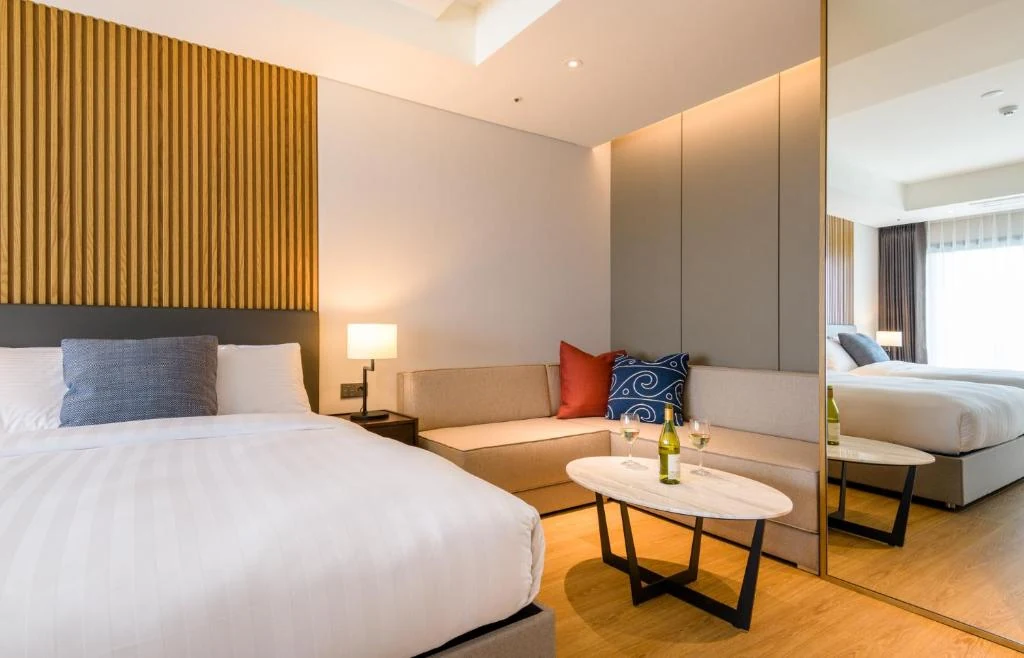
Choose Lahan Hotel Jeonju when the day is built around the hanok district, an evening meal and an early return. Its position near the core makes it practical to leave bags, walk the main loop and keep the quietest lanes for the next morning instead of spending the best energy on a long transfer.
Open Jeonju stay optionsJeonju Hanok Hotel Kung
Choose a hanok-style stay such as Jeonju Hanok Hotel Kung when the overnight itself is part of the reason for coming. It supports a slower evening around the traditional streets and lets you use the next morning for rooflines and lanes without adding another distant attraction.
Open Jeonju stay optionsDecide whether your night ends at the market or starts with a quiet morning walk, then choose the base that protects that decision.
Small choices that protect the neighbourhood
Traditional houses can be homes as well as businesses. Keep voices down near doors, do not use a threshold as a tripod, and do not enter a courtyard because a gate is open. When a lane becomes busy, move to the side instead of stopping in the middle. These choices make the route more pleasant for residents and for your own group, because you can look up and notice details rather than managing a crowd around you.
Costume rental can be part of the day, but it should fit the route. Confirm the return time, weather policy, footwear and the surfaces you will walk over before renting. If the group does not want costume photographs, nothing is missing: the cultural stop, food decision and morning lanes already make a complete visit.
A simple day plan
- Morning: arrive with luggage solved, walk the outer lanes and choose the direction of the day.
- Late morning: visit one confirmed cultural anchor, keeping the approach and exit in the time budget.
- Lunch: eat before the group is exhausted; change food category if a queue would damage the rest of the day.
- Afternoon: choose Nambu Market, the modern streets or one hill branch. Keep the other two optional.
- Evening: return along a known route, or make the market the finish and keep the next morning free.

Final decision
Jeonju Hanok Village is worth a visit when you allow it to be a neighbourhood rather than a photograph queue. A half-day needs lanes, one cultural stop and food. A full day can add either the market or a hill. An overnight lets the busy evening and the quiet morning do different work. You do not need every named place. Keep one clear purpose, one flexible branch and enough time to sit. That is how the walk remains enjoyable when crowds, queues or weather refuse to follow the map.
Let the hanok quarter work twice
Jeonju Hanok Village earns an overnight when the same lanes are allowed to change. Use the afternoon for Gyeonggijeon or one cultural anchor, let the busier main street and market carry the evening meal, then return to the residential lanes the next morning. The early light and quieter doors make a different visit. With half a day, keep one calm lane rather than forcing Nambu Market, Gaeksa and a hill into one unbroken walk.
Seasons alter the walking rhythm. Spring and autumn suit a loop through the outer lanes before dinner. Summer belongs to an early walk, with tea rooms or indoor culture in the hot hours. In winter, bring the slick stone and earlier sunset into the plan and do not add an unfamiliar hill after dinner. Rain can still support a half-day through one indoor cultural stop, nearby food and a short lane; clothing experiences need to fit the ground, not the photograph.
Make the next transfer simple
If the next morning points to Jeonju Station or another city, keep dinner and the room on the same side of the quarter so luggage does not cross the busiest lanes. Choose one main direction toward the market or Gaeksa and leave a small shop or hill as the deletable branch. With children, older travellers or a stroller, agree on one seat and one return time; the group can move at different speeds without splitting the day.
Choose the room by the real walk to a gate, luggage storage, evening lighting and breakfast timing. Being closest on a map is not always the saving. A base that lets you finish at dusk, return at dawn and avoid crossing town for the next train protects the Jeonju route. Leave room for the roofs, the history, the food and the living lanes to speak separately.
KriNavi decision card
Best use of this page: How to Walk Jeonju Hanok Village Beyond the Photo Streets
Core judgement: Build a practical Jeonju Hanok Village walk around quiet lanes, Gyeonggijeon, food, Nambu Market and one optional hill instead of a photo checklist.
This card only reorganizes sources already listed by the page. Recheck live hours, prices, service, and restrictions for the travel date.