
Short answer: Bukhansan Dulle-gil is best planned by section: choose an easy forest-and-heritage walk, a reserved historic route or a longer mountain edge instead of treating the whole ring as one outing. Current hours, prices, transport, facilities, events, weather, closures, safety notices and lodging availability are to be checked close to travel.
- A section-first Seoul forest decision that compares Banghakdong-gil, Uiryeong-gil, Cloud Garden Trail and other Dulle-gil options by effort, history, access control and the group’s return.
- A Seoul visitor wants mountain atmosphere without a summit climb and must balance gentle paths, royal tombs, observatories, reservation rules, transit and a city hotel.
- Current hours, prices, transport, facilities, events, weather, closures, safety notices and lodging availability are to be checked close to travel.
- Choose one primary experience and one reversible fallback before you leave.
Choose a section before choosing Bukhansan
Bukhansan Dulle-gil is a family of forest-edge walking sections, not one uniform trail. Seoul’s official hiking pages describe Banghakdong-gil as a gentle 3.1-kilometre walk with Musugol, an observatory and royal tombs; Uiryeong-gil is a longer 6.42-kilometre route with reservation requirements; Cloud Garden Trail offers a five-kilometre forest route and elevated deck. Begin with the section that matches the group, not the mountain name. Current hours, prices, transport, facilities, events, weather, closures, safety notices and lodging availability are to be checked close to travel.
The central decision is between easy continuity, heritage texture and a more managed mountain-edge experience. A short section can give forest, views and history in one hour. A reserved path can feel more special but adds planning and identification requirements. A longer section supplies more landscape but increases transit and weather exposure. Choose one section, one finish and one lower-effort fallback before leaving the city.
Use official difficulty and distance as a starting point
The official Seoul pages give concrete comparisons: Banghakdong-gil is listed at about 3.1 kilometres and one hour ten minutes with easy difficulty; Uiryeong-gil at about 6.42 kilometres and two hours, also described as easy but controlled by reservation; Cloud Garden Trail at about five kilometres and two hours. These figures make planning possible, but pauses, children, photographs, access checks and station walks still add time.
A route that is easy in gradient can still be difficult in logistics. A reserved entrance missed by ten minutes can defeat an otherwise comfortable walk. A downhill bus connection after a long forest section can feel harder than the trail. Record start, finish, rest, toilets, reservation proof and return before going. Current distance, access rules, works, opening hours and reservation procedures are to be checked.
Banghakdong-gil is the gentle heritage choice
Banghakdong-gil begins at Musugol, passes the Ssangdungi Observatory and ends near the tomb of Princess Jeongui and Ahn Maeng-dam, according to the official Seoul guide. It is a strong option when the group wants forest, a small rural feeling, a view and history without a summit climb. The route’s value is its sequence rather than one dramatic peak: rice paddies, pine trees, outlook and royal tombs change the pace.
The trade-off is that its easy character can be underestimated. The start still needs a station or shuttle walk, and a family may linger at Musugol or the tombs. Autumn foliage can make a short route busy and slower. Use Banghakdong-gil when a calm half-day matters more than a strenuous badge. Current shuttle information, cafés, camping, tomb access, path works and rest areas are to be checked.
Uiryeong-gil is easy walking with serious preparation
The official Uiryeong-gil page describes a 6.42-kilometre route between entrances, preserved ecology, gentle ascents and an observatory, but it also requires a reservation and identification. That combination is the decision: the walking may be manageable, while the entry system and one-way logistics demand attention. The route can suit travellers who like a controlled, quieter corridor and do not mind planning several days ahead.
Do not book Uiryeong-gil for a spontaneous morning. Verify the reservation date, entry time, identity requirement, entrance and return connection, then keep a non-reserved alternative in the city. A missed slot can turn the route into an argument before the forest begins. Current reservation windows, last entry, winter timing, visitor-centre operation, weather and trail closures are to be checked on the official system.
Cloud Garden Trail rewards a forest-and-view balance
The official guide describes Cloud Garden Trail as a five-kilometre, roughly two-hour easy walk with a long deck over a ravine, observatories and views of Bukhansan peaks. This makes it a useful middle choice: more visual change than the shortest heritage section, less administrative commitment than a reserved route. The deck and canopy give the group a reason to slow down without requiring a summit.
The route still has an access and weather cost. A wet deck, heat under trees or a long return can reduce the comfort implied by “easy.” Use the observatories as planned pauses rather than promises of a clear peak view. If the group needs a shorter day, turn around at a confirmed point or choose Banghakdong-gil. Current deck access, surface, construction, facilities and visibility are to be checked.
Treat forest sections as living neighbourhood edges
Bukhansan Dulle-gil is woven into Seoul’s outer neighbourhoods. A route may begin beside a station, pass a village or cemetery, enter a forest and finish near a road rather than at a grand gate. That is part of the appeal: the day shows how nature, memory and everyday city life meet. It also means residents, shuttle users and hikers share narrow spaces. Keep noise low, follow local signs and do not block entrances.
A section-first route protects the group from overclaiming wilderness. Choose the moment that matters—pine shade, a view, a tomb, a deck or a stream—and let the rest be a calm connector. The limitations are real: construction, private boundaries, seasonal maintenance and uneven facilities can interrupt continuity. Current access, etiquette, toilets, cafés, transport and any protected-area instruction are to be checked.
Make the season decide the section
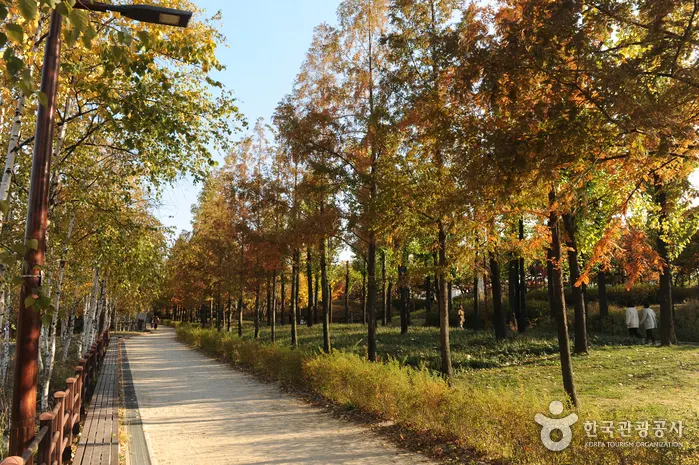
Spring can favour a gentle forest section and fresh green, while summer rewards an early start, shade and water. Autumn is especially strong on Dulle-gil because official Seoul pages highlight maple and forest colour, but that also brings demand. Winter reveals the structure of the trail and peaks, yet cold surfaces and shorter daylight favour a short section near a reliable return. The route should change with the body and the light.
Do not force a reserved or longer section just because the season is famous. A rainy autumn may make a lower heritage route wiser; a hot summer may make a deck or shaded short loop better than a broad forest day. Check foliage, heat, snow, ice, reservation, opening hours and current closures. A good fallback is a city museum, café or neighbourhood meal that keeps the day coherent.
Stay near the section’s actual return
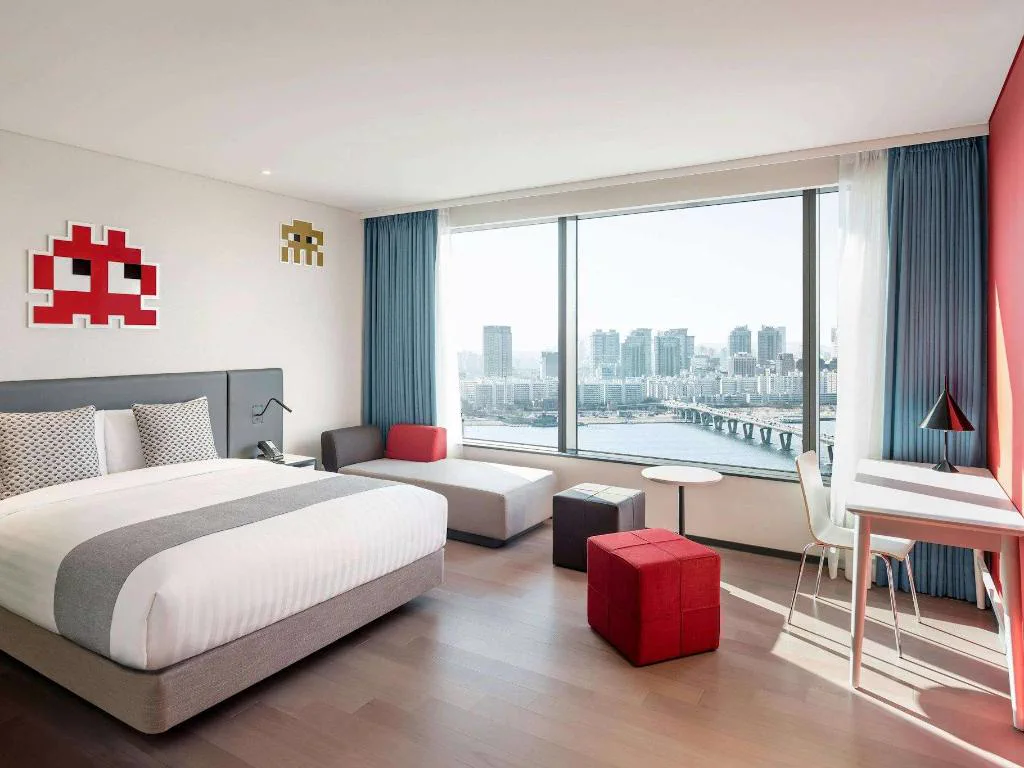
Central Seoul makes many Dulle-gil sections reachable, but the first and last station walks can be longer than the trail itself. A northern or eastern base can simplify Banghakdong-gil or Uiryeong-gil; a central base gives more food and an easier alternative when weather changes. Choose the hotel after choosing the section, especially if a reservation fixes the start time.
Compare the morning connection, final bus, luggage storage, breakfast and a warm recovery place. A family may value a lift and nearby dinner over a nominally closer guesthouse. A reserved route needs cancellation flexibility because weather can make a fixed forest day uncomfortable. Rates, shuttle, station works, late food and current trail access are to be checked before booking.
Executable route decision table
| Route | Best for | Sequence | Trade-off |
|---|---|---|---|
| Banghakdong-gil heritage walk | For easy forest, an observatory and royal tombs | Start at Musugol; use the gentle trail; pause at the view; finish at the tombs and exit on the verified connection | Strong value in a short day, but autumn demand can slow it. |
| Uiryeong-gil reserved route | For prepared walkers seeking preserved forest and a controlled experience | Reserve and carry identification; enter on time; use shelters and observatory; leave from the opposite entrance | Quiet and distinctive, but the reservation failure point is high. |
| Cloud Garden Trail | For forest, deck and peak views without a summit | Start at the confirmed ecological park; walk the deck and observatories; return before fatigue | Balanced scenery, but surface and visibility vary. |
| Short local forest fallback | For heat, rain, no reservation or limited mobility | Choose an established section near transit; keep the walk brief; finish with a city stop | Reliable and flexible, but less route continuity. |
Spring, summer, autumn and winter decisions
| Season | How to use the route | Seasonal trade-off |
|---|---|---|
| Spring | Use a gentle section for fresh forest, heritage and an unhurried morning. | Green growth is pleasant, but rain, pollen and changing access can slow the path. |
| Summer | Start early, carry water and choose shade or a shorter section. | Forest helps, but humidity, storms, insects and transport heat add effort. |
| Autumn | Reserve early if needed and use Banghakdong or a foliage-rich section with a slower pace. | Colour is rewarding, but crowds, leaves and earlier darkness change the return. |
| Winter | Choose daylight, warm layers and a reliable short section near the city. | Open views and quiet woods are appealing, but ice, cold and limited services matter. |
Seasonal descriptions are planning signals rather than guarantees. Water, wind, light, events, access, crowds and facilities are to be checked close to travel. Seoul Bukhansan Dulle-gil Route Decision: Easy Forest Loop, Heritage Section or a Longer Mountain Edge? is updated 2026-09-13.
Positive evidence signals
- Different sections make Bukhansan accessible without demanding a summit climb.
- Forest, observatories, royal tombs and neighbourhood edges provide real narrative variety.
- Official guides give distances, travel times, difficulty and transportation clues.
- A short route can fit a family morning while a longer section rewards repeat visitors.
- The trail keeps nature close to Seoul’s transit and accommodation network.
Limitations and negative evidence signals
- “Easy” trail labels do not remove station walks, stairs, weather or return logistics.
- Uiryeong-gil requires advance reservation and identity checks, so spontaneity is limited.
- Forest views, foliage and deck conditions depend on season and maintenance.
- Facilities and access can differ sharply between sections.
- A one-way route can leave a tired group far from its original station or hotel.
Choose a route shape
| Route shape | How it works | Best match |
|---|---|---|
| The gentle history loop | Use Banghakdong-gil for forest, a viewpoint and royal tombs in one manageable chapter. | Best for families and first-time forest walkers. |
| The planned quiet route | Reserve Uiryeong-gil, arrive with identification and accept the fixed entry system. | Best for prepared repeat visitors. |
| The canopy-and-peaks walk | Choose Cloud Garden Trail for a deck, observatories and a forest balance. | Best for travellers wanting scenery without a summit. |
Accommodation and return decision
| Stay shape | Why it helps | Cost or friction |
|---|---|---|
| Central Seoul base | Keeps many sections and weather alternatives reachable. | The first and last station transfer may be longer. |
| Northern Seoul base | Can simplify Banghakdong or Uiryeong access and early starts. | Fewer central evening options may be available. |
| Eastern or station-area base | Useful for a timed route and an easy post-walk meal. | Choose carefully around the specific section, not the mountain name. |
- Source 1: official destination, city, tourism, heritage or operator information. Claims and live details should be checked against the linked page close to travel.
- Source 2: official destination, city, tourism, heritage or operator information. Claims and live details should be checked against the linked page close to travel.
- Source 3: official destination, city, tourism, heritage or operator information. Claims and live details should be checked against the linked page close to travel.
- Source 4: official destination, city, tourism, heritage or operator information. Claims and live details should be checked against the linked page close to travel.
- Source 5: official destination, city, tourism, heritage or operator information. Claims and live details should be checked against the linked page close to travel.
Frequently asked questions
Is Bukhansan Dulle-gil a summit hike?
No. It is a network of forest-edge sections; choose a Dulle-gil section rather than a summit route when you want a gentler day. Current hours, prices, transport, facilities, events, weather, closures, safety notices and lodging availability are to be checked close to travel.
Which section is easiest?
Official Seoul information describes Banghakdong-gil and Cloud Garden Trail as easy options, but current surfaces and access are to be checked. Current hours, prices, transport, facilities, events, weather, closures, safety notices and lodging availability are to be checked close to travel.
Does Uiryeong-gil need a reservation?
The official guide says reservations and identification are required; confirm the current booking and entry rules. Current hours, prices, transport, facilities, events, weather, closures, safety notices and lodging availability are to be checked close to travel.
Can children walk it?
Short sections such as Banghakdong-gil can suit families when the pace, facilities and weather are appropriate. Current hours, prices, transport, facilities, events, weather, closures, safety notices and lodging availability are to be checked close to travel.
Is autumn the best season?
Autumn colour is a strong reason to go, but spring, summer shade and winter structure can work with a different section choice. Current hours, prices, transport, facilities, events, weather, closures, safety notices and lodging availability are to be checked close to travel.
Where should I stay?
Choose central Seoul for flexibility, or a northern/eastern base after selecting the exact section and return. Current hours, prices, transport, facilities, events, weather, closures, safety notices and lodging availability are to be checked close to travel.
KriNavi decision card
Best use of this page: Seoul Bukhansan Dulle-gil Route Decision: Easy Forest Loop, Heritage Section or a Longer Mountain Edge?
Core judgement: Choose Bukhansan Dulle-gil around an easy forest section, royal tombs, observatories, reservation needs, seasons and a Seoul return.
This card only reorganizes sources already listed by the page. Recheck live hours, prices, service, and restrictions for the travel date.