
Short answer: The Seoul City Wall is best planned as a choice among six manageable sections rather than a promise to walk every kilometre in one day. Current hours, prices, transport, facilities, events, weather, closures, safety notices and lodging availability are to be checked close to travel.
- A section-first city-wall decision that compares Naksan, Namsan, Baegak, Inwangsan and gate-area walks, protecting the historical meaning and the practical return instead of chasing a single full-loop badge.
- A Seoul visitor wants fortress history and elevated city views but has limited time, mixed hill tolerance, changing access rules and a hotel in a different part of the city.
- Current hours, prices, transport, facilities, events, weather, closures, safety notices and lodging availability are to be checked close to travel.
- Choose one primary experience and one reversible fallback before you leave.
Choose a section before you choose a slogan
Hanyangdoseong follows the ridges around Seoul's historic centre. The official Seoul City Wall site describes an 18.6-kilometre wall, typically five to eight metres high, managed across the ridges of Baegak, Naksan, Namsan and Inwangsan, with additional gate-area sections. Seoul Metropolitan Government guidance recommends dividing the experience into six sections. That is the practical starting point: choose one section that fits your body, light and return rather than treating the full length as a test. Current hours, prices, transport, facilities, events, weather, closures, safety notices and lodging availability are to be checked close to travel.
A wall walk can be a history route, a hill walk, a skyline route or a neighbourhood connector. Naksan is often approachable for an evening city view; Namsan combines ridge, parks and major-city landmarks; Baegak and Inwangsan feel more like serious upland walking; gate sections trade elevation for urban history. The right section depends on what the group wants to notice. A shorter route with time to read gates and wall repairs may be richer than a hurried full circuit.
Use the official sections to manage effort
The wall's official route structure makes effort visible. Baegak is described as high difficulty, while the Namsan course is listed at about 5.2 kilometres and around three and a half hours with average difficulty. These figures are useful comparisons, not promises: weather, stairs, photography, access controls and the group's pace change the day. Read the section description, then add a margin for getting to the start and leaving the finish.
Do not choose a high ridge because it appears closest to your hotel. A steep transfer before the wall can spend the energy you meant to reserve for history. Conversely, a lower gate section may feel too easy for a group expecting a hike. Mark the starting gate, highest point, likely rest, exit station and a turnaround point. Current course access, construction, opening restrictions and route notices are to be checked before departure.
Naksan and Namsan answer different view questions
Naksan and Namsan can both produce city views, but they frame Seoul differently. Naksan gives a close relationship between wall, neighbourhood and evening lights; Namsan places the wall inside a larger mountain-and-landmark sequence. Choose Naksan when you want an accessible urban edge and a flexible night finish. Choose Namsan when the group wants a longer park and ridge experience with more major sights along the way.
The trade-off is atmosphere versus route depth. A Naksan walk can be a compact after-dinner chapter, but it may feel busier and less remote. Namsan offers more green relief and a longer sense of journey, yet the climb, city traffic and return options take more planning. Light, crowd levels, stairs and weather change the comparison. Do not promise a particular skyline from a wall corner; visibility and trees are to be checked on the day.
Baegak and Inwangsan need respect for the hill
Baegak and Inwangsan are choices for travellers who genuinely want ridge walking, not merely a historic wall photograph. The official Baegak course information describes a route through gates, information points and village or park approaches, with high difficulty. Inwangsan adds rock, open exposure and a stronger sense of mountain terrain. That can be the most memorable expression of Hanyangdoseong, but only when footwear, weather, pace and access rules are taken seriously.
A hill route needs a daylight margin and a conservative exit. If the group is late, tired or affected by rain, choose a lower section rather than pressing upward to protect a plan. Carry water, keep hands free on stairs and avoid turning a viewpoint pause into a risky scramble. Current military-area guidance, access hours, trail works, weather, closures and route directions are to be checked; Seoul's wall is a living managed site, not an unrestricted ridge.
Read the wall as a city boundary
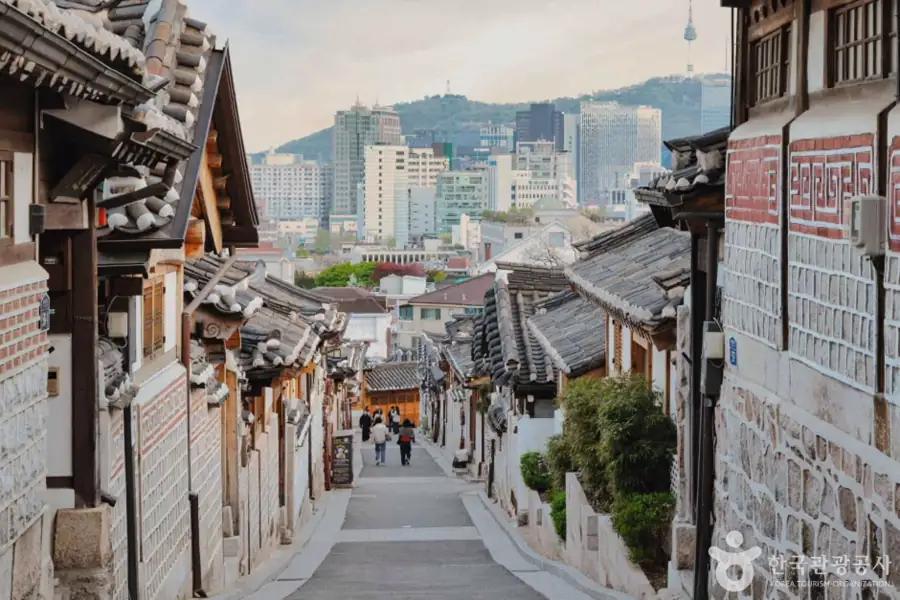
The wall is valuable because it sits between layers of Seoul: gates and alleys, reconstructed sections and surviving fragments, mountain ridges and modern towers. A route can therefore be successful without a constant panoramic view. Slow down at one gate, one repaired section and one place where the wall meets a contemporary street. The official introduction explains its Joseon capital role and the four main and four auxiliary gates, giving a useful historical frame before walking.
The decision is whether your group prefers continuity or contrast. A continuous ridge section makes the wall feel like a defensive line. A gate-area route shows how urban growth has covered, removed or preserved parts of it. Families may understand the city boundary through a gate and neighbourhood snack; history-focused travellers may prefer a longer section with fewer interruptions. Signage, restoration work, museum access and current interpretation are to be checked.
Plan start and finish as separate transport problems
A wall route is rarely a loop that returns you to the same station. Start and finish stations, bus connections, stair streets and the direction of the sun matter. Official course pages provide access examples for gates and information centres, but route conditions and bus patterns change. Save both ends before setting off, and choose a meeting point that works if the group separates for a photograph or a slower climb.
For a one-way walk, place the easier exit after the most tiring section. For a sunrise or sunset plan, verify whether the return path is lit and whether the final station remains convenient. Taxis can help at some urban edges but are not a substitute for knowing the road name. Current bus routes, station exits, access times, construction, lighting and taxi supply are to be checked close to travel.
Seasons change the wall’s meaning
Spring softens the wall with new leaves and flowers, but blossoms can narrow paths and increase weekend demand. Summer gives long light and green ridges, yet heat and storms make exposed climbs harder. Autumn clarifies the relationship between stone, foliage and towers, while winter reveals the line of the wall and can make the city lights feel sharper. Use the season to choose a section, not only to choose a photo filter.
A seasonal plan needs a surface decision. In rain, a lower gate route may be wiser than a steep ridge. In heat, start early and use a shorter section with shade or an indoor stop. In winter, keep daylight and warm-up options close. Foliage timing, snow or ice, restoration, opening restrictions, crowd levels and event arrangements are to be checked. The best wall day is the one whose final descent still feels deliberate.
Stay where the chosen section can end cleanly
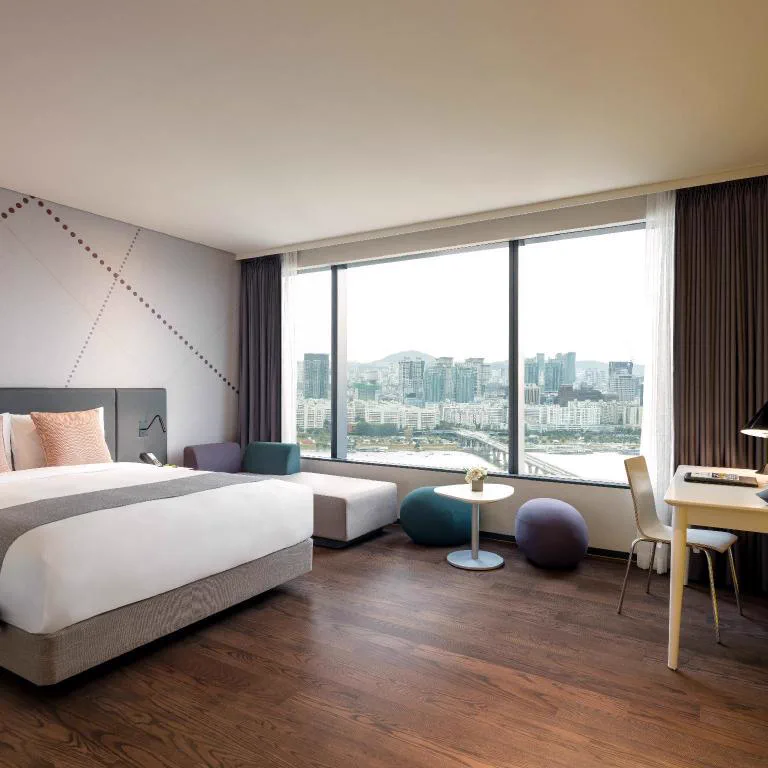
A Jongno or central Seoul base can make several wall sections accessible and gives easy food after a walk. A Naksan-adjacent stay suits an evening urban route, while a Namsan or Jung-gu base may shorten a southern section. A hotel far across the city can still work if the wall is one part of a wider itinerary, but it adds a fixed transfer before and after a hill. Choose the base after selecting the section.
Accommodation trade-offs include more than station distance. A tired group needs a simple last walk, luggage storage and a meal that remains available after the route. A sunrise walker needs an early connection and a quiet return; a family needs lifts and a low-friction neighbourhood. Room rates, cancellation, breakfast time, station construction and late transport are to be checked. A central bed that costs a little more may protect the route's most important recovery period.
Executable route decision table
| Route | Best for | Sequence | Trade-off |
|---|---|---|---|
| Naksan urban wall walk | For city lights, neighbourhood texture and a flexible evening | Start near the verified station approach; follow the wall; pause at gates and city outlooks; exit into a meal district | Accessible city contrast, but crowds and stairs can vary. |
| Namsan section | For a balanced history, park and skyline day | Use the official southern course; allow a long half-day; finish at the chosen gate or station | Rich and varied, but longer and more tiring than a short gate walk. |
| Baegak or Inwangsan ridge | For experienced walkers who want mountain terrain | Start in full daylight; verify access; carry water; keep a conservative turnaround | Strongest ridge feeling, but highest exposure and access sensitivity. |
| Gate-and-neighbourhood sampler | For families, heat, rain or limited time | Choose one or two gates and surviving wall sections; add an indoor or food chapter | History remains accessible, but the wall feels less continuous. |
Spring, summer, autumn and winter decisions
| Season | How to use the route | Seasonal trade-off |
|---|---|---|
| Spring | Choose a leafy section early in the day and leave margin for blossoms and busy paths. | Fresh scenery is generous, but rain, pollen and weekend traffic slow the route. |
| Summer | Start early, carry water, shorten the ridge and reserve shade or indoor recovery. | Long daylight helps, but heat, storms and exposed steps raise the effort. |
| Autumn | Use clear air and foliage for a measured ridge or Namsan sequence. | Excellent walking conditions can bring crowds, and sunset arrives earlier than expected. |
| Winter | Use daylight, warm layers and a lower section if surfaces or wind are difficult. | Bare trees clarify the wall, but ice, cold, short daylight and access limits matter. |
Seasonal descriptions are planning signals rather than guarantees. Water, wind, light, events, access, crowds and facilities are to be checked close to travel. Seoul City Wall Route Decision: Naksan Lights, Namsan History or a One-Section Fortress Walk? is updated 2026-09-13.
Positive evidence signals
- The six-section approach lets travellers match history and hill effort to a real day.
- Gates, repaired wall, neighbourhoods and modern skyline create a layered city reading.
- Naksan, Namsan, Baegak, Inwangsan and gate sections provide genuinely different route moods.
- One-way access can connect a wall walk to meals, markets and museums without backtracking.
- Official route pages provide detailed starting points and useful difficulty comparisons.
Limitations and negative evidence signals
- The 18.6-kilometre wall is not a sensible default day for every traveller.
- A route can include more stairs, hill streets and exposure than a simple city map suggests.
- Access rules, restoration, lighting, weather and military-area guidance can change.
- The best city view is not guaranteed in haze, rain or foliage-heavy sections.
- A poor start-and-finish plan can make the return harder than the walk itself.
Choose a route shape
| Route shape | How it works | Best match |
|---|---|---|
| The urban edge | Use Naksan or a gate section for wall, neighbourhood and evening light in one compact chapter. | Best for first visits and short Seoul stays. |
| The balanced half-day | Choose Namsan or another moderate section with one cultural pause and a planned finish. | Best for travellers wanting scenery plus history. |
| The ridge commitment | Take Baegak or Inwangsan only with daylight, footwear, weather margin and verified access. | Best for experienced walkers who value terrain. |
Accommodation and return decision
| Stay shape | Why it helps | Cost or friction |
|---|---|---|
| Jongno or central base | Keeps several sections and post-walk meals within practical reach. | Popular areas may be noisy or costly. |
| Naksan or eastern-centre base | Makes an evening Naksan route and neighbourhood return simple. | Less convenient for western or southern wall sections. |
| Namsan or Jung-gu base | Shortens a southern wall route and suits a mixed Seoul day. | The chosen section may still require a station transfer. |
- Source 1: official destination, city, tourism, heritage or operator information. Claims and live details should be checked against the linked page close to travel.
- Source 2: official destination, city, tourism, heritage or operator information. Claims and live details should be checked against the linked page close to travel.
- Source 3: official destination, city, tourism, heritage or operator information. Claims and live details should be checked against the linked page close to travel.
- Source 4: official destination, city, tourism, heritage or operator information. Claims and live details should be checked against the linked page close to travel.
- Source 5: official destination, city, tourism, heritage or operator information. Claims and live details should be checked against the linked page close to travel.
Frequently asked questions
How long is the Seoul City Wall?
The official site describes an 18.6-kilometre wall and recommends dividing it into six sections rather than assuming one full day. Current hours, prices, transport, facilities, events, weather, closures, safety notices and lodging availability are to be checked close to travel.
Which section is easiest?
Gate and neighbourhood sections usually reduce ridge effort, while Naksan and Namsan offer different levels of stairs and city walking. Check current course information. Current hours, prices, transport, facilities, events, weather, closures, safety notices and lodging availability are to be checked close to travel.
Is Baegak suitable for everyone?
The official course information describes high difficulty; choose it only with suitable footwear, daylight, weather margin and verified access. Current hours, prices, transport, facilities, events, weather, closures, safety notices and lodging availability are to be checked close to travel.
Can I walk at night?
Some urban sections suit an evening walk, but lighting, access, weather and safe transport are to be checked; do not assume every ridge is open. Current hours, prices, transport, facilities, events, weather, closures, safety notices and lodging availability are to be checked close to travel.
Where should I stay?
Choose a central, Naksan or Namsan base after deciding the section and its finish, not before. Current hours, prices, transport, facilities, events, weather, closures, safety notices and lodging availability are to be checked close to travel.
Do I need to walk all the way?
No. A well-chosen section can deliver stronger history and less fatigue than a rushed full-wall attempt. Current hours, prices, transport, facilities, events, weather, closures, safety notices and lodging availability are to be checked close to travel.
KriNavi decision card
Best use of this page: Seoul City Wall Route Decision: Naksan Lights, Namsan History or a One-Section Fortress Walk?
Core judgement: Choose a Seoul City Wall section around ridge effort, historic gates, city views, seasonal light, transport and a practical Seoul base.
This card only reorganizes sources already listed by the page. Recheck live hours, prices, service, and restrictions for the travel date.