KRINAVI TRIP FIT
KRINAVI Trip Fit
75/100Seoul for 5 Nights: One Hotel or Split Hongdae and Myeongdong?。 Judge the complete door-to-door route and changeable details first; do not decide from attraction fame or one headline price alone.

- Time efficiency70/100
- Route fit90/100
- Planning flexibility70/100
- Weather resilience70/100
- Crowd control70/100
- Value for cost70/100
Visible dimensions organize the page conditions across time, route, booking, weather, crowds, and cost; each uses five-point increments and the total is their mean.
Check before departure: Recheck official hours, prices, reservations, service, weather limits, and same-day crowd notices before departure.
Five nights in Seoul makes a Hongdae–Myeongdong split look reasonable. You have enough time to experience both areas, and moving once may seem like a way to reduce cross-city travel. The better question is what the fifth night actually adds. Is it another full day, a final-night luggage buffer, or simply weather, shopping or rest margin? The answer changes whether a second hotel is useful. A hotel move is not an upgrade unless it removes a repeated journey over the next two days.
The real difference between four and five nights is one flexible block
With four nights, arrival, departure and three full days already make the calendar tight. A hotel-change day needs a strong reason. A fifth night creates enough room for one area to become more than a place to sleep. For example, Hongdae can handle arrival, western Seoul dinners and the first part of the trip; Myeongdong can then serve central Seoul, shopping and final packing. If you have not yet decided which base actually fits, start with Hongdae vs Myeongdong rather than assuming the split itself is the answer.
But the fifth night may simply be your final night. If you leave early the next morning, have a lot of shopping to repack, or need a train connection, that night should simplify the exit rather than add a new neighborhood. See Myeongdong vs Seoul Station for the last night before forcing the trip into a neat split.
When moving from Hongdae to Myeongdong makes sense
Hongdae works well first when you arrive late, spend your first evenings on the west side, and want the first day or two to end near your hotel. If that first night is driven by a late flight rather than neighborhood preference, use the late-arrival first-night guide before locking all five nights in Hongdae. Moving to Myeongdong starts to make sense when the next two days are genuinely centered on central Seoul and you will repeatedly use the hotel for shopping drop-offs, an afternoon reset or an earlier return after dinner.
The move day should already be heading toward central Seoul. Check out, leave your bags, do a same-direction day, then check in later. If the luggage handoff is the part making that plan brittle, use the luggage-before-check-in guide before assuming storage makes the move seamless. If you spend the morning in Hongdae, the afternoon far south, and only return to Myeongdong at night, the luggage and check-in process never really pays you back.
When keeping Myeongdong first and Hongdae later works
You can also finish in Hongdae if central Seoul is front-loaded and the final two nights are intentionally slower, with dinners and evenings on the west side. That version only works once the departure route is clear. “Hongdae is nicer for the last night” and “Hongdae is easier with luggage tomorrow” are not the same statement.
A fixed concert, reservation or event may affect one night, but it should not automatically choose the base for all five. Once the event is confirmed, compare it with the rest of the trip rather than letting one possible activity drive a non-refundable hotel plan. Put those fixed nights into the 5-day Seoul itinerary before deciding whether the hotel should move with them.
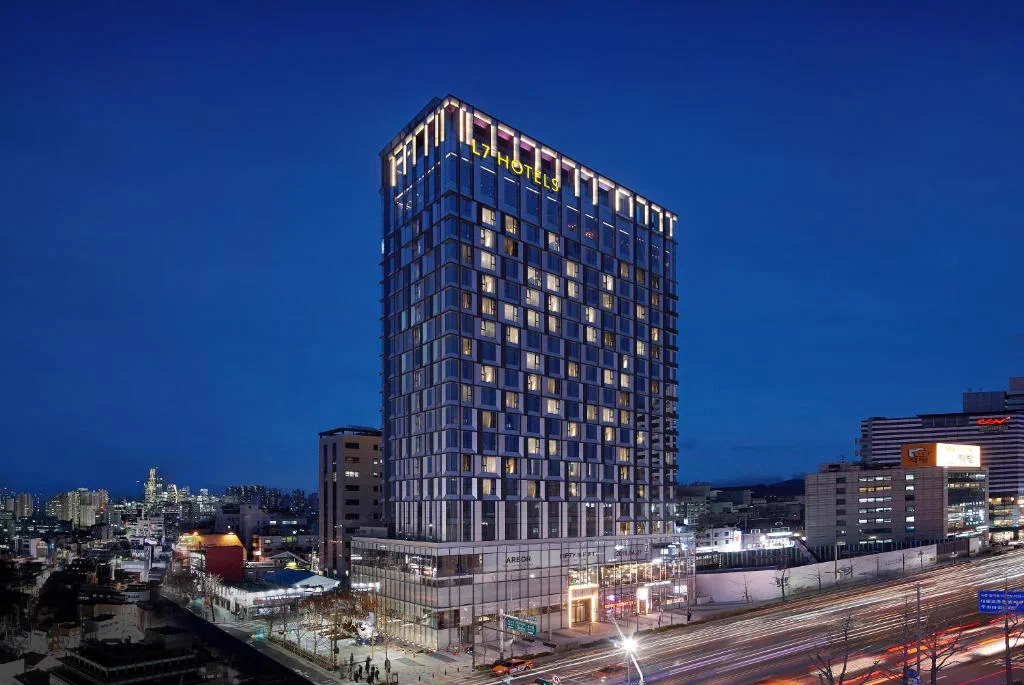
One hotel for all five nights buys flexibility
Staying put is not the conservative option. You remove one checkout, one luggage decision, one new check-in and one period when you cannot simply return to your room. That matters when weather changes, shopping grows, or someone in the group wants to rest. Seoul’s transport network still lets you spend full days in different areas while keeping one reliable end point each night.
This option becomes even stronger for three travelers, families, heavy luggage or mixed schedules. Hotel moves scale badly with the number of people because packing, storage and room allocation all multiply. If three adults are still deciding how many rooms to book, see triple room vs two rooms for three adults first. For the broader trade-off, use the one-hotel versus two-base test.
The fifth night can simply be an unplanned night
One of the best uses of a fifth night is having no obligation to make it a new hotel experience. If the first four days are full, the weather shifts, or you simply want dinner near the hotel and an early night, staying in the same room may be more valuable than adding another neighborhood.
This gives you a clean threshold for splitting: the fifth night is not needed as buffer, and the second area genuinely serves at least two consecutive time blocks. If those conditions are missing, the second hotel mostly creates administration.
Do not schedule the move day around your most important activity
Moving days look deceptively simple on paper. Checkout, storage, finding the next property and waiting for the new room can make a time-sensitive attraction feel stressful. Use the day for a same-direction lunch, a flexible neighborhood or something near the next hotel. That is not wasted time; it is what allows the second base to start working immediately.
The second hotel does not have to be in Myeongdong
If the last night needs to serve Seoul Station, Yongsan, an airport route or a different side of the city, another area may be better. This is why “Hongdae vs Myeongdong” should not become a rigid template. Assign a job to the night first, then pick the address that serves it. If airport rail and suitcases dominate the choice, compare Seoul Station, Gongdeok and Hongdae before choosing a transport-hub hotel. Once the area is settled, use the Seoul hotel guide to compare actual properties instead of mixing area and hotel decisions.
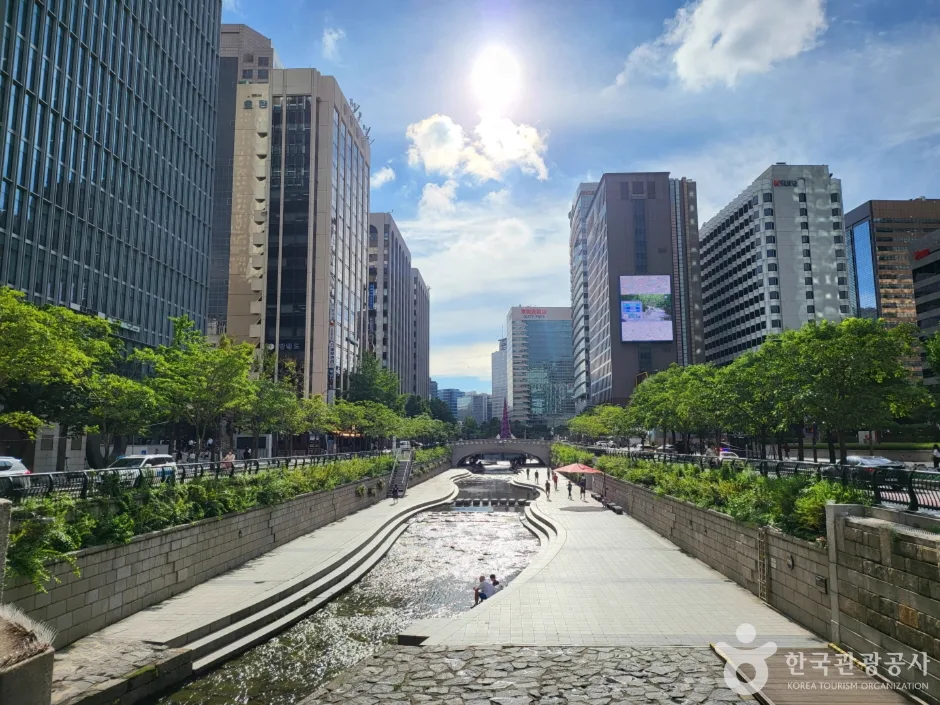
Write the five nights as two blocks before booking
- One hotel: the fifth night is buffer, weather margin, shopping or final packing; your days still cross different parts of Seoul.
- Hongdae → Myeongdong: the first block serves arrival and western evenings; the second block has at least two central-Seoul time periods and a useful final night.
- Myeongdong → Hongdae: central Seoul comes first, the west side takes over later, and your departure route still works.
- Do not lock it yet: flights, final-night logistics, fixed events or room requirements are still unsettled.
Five nights makes a split possible, not free. Change hotels only when the second address genuinely serves the following two days.
Continue planning
Useful next decisions
- Compare the tighter four-night version of the same split
- See how the calculation changes with children
- Check triple-room reality before moving three travelers
- Confirm late check-in if the move day ends late
- Lotte Hotel Seoul for a central Myeongdong-side shortlist
- Westin Josun Seoul as another central option
- AMID Hotel Seoul for a Jongno-side base
- Novotel Dongdaemun if the second block stays east-central
More Reading
Sources and recheck
Transport, hotel room types, check-in times, availability and cancellation policies can change. Recheck your exact dates and property terms before payment. Content reviewed August 14, 2026.
KriNavi decision card
Best use of this page: Seoul for 5 Nights: One Hotel or Split Hongdae and Myeongdong?
Core judgement: Five nights in Seoul gives you more room to split hotels—but only if the second base. Compare location, rooms and booking constraints before reserving.
This card only reorganizes sources already listed by the page. Recheck live hours, prices, service, and restrictions for the travel date.