
Suncheon Bay and old downtown can share a day, but they are not two evening photo stops. The Bay needs time for the walk from the entrance to the wetland viewpoints, the changing shape of reeds and water, and the return to the transport point after the light fades. Old downtown works best as the part that can absorb a late arrival: a meal, a short street walk, a rest and a straightforward hotel return. Protect the Bay finish first, then decide how much city time remains.
- Landscape-led: give Suncheon Bay the daylight and late light, then keep old downtown to one flexible dinner.
- City-led: walk a representative wetland section in daylight and keep the evening for food, recovery and an easy return.
- Delete line: write the latest departure from the Bay; after that time, remove a long city walk rather than removing the return buffer.
- Tide is one condition: use it to understand the landscape, but do not treat it as a substitute for access, path or safety information.
Late light at the Bay and a town evening do different jobs
The Bay takes time to reveal itself. From the entrance, the group still has to walk to the section it wants to see, find a pace that works for everyone and allow the wind, cloud and waterline to become part of the view. Arriving a few minutes before sunset may produce a sky photograph, but it does not necessarily produce a wetland visit. After the last look, the group must walk back, find the correct transport, wait, and reach old downtown. Those minutes are part of the route even when a map does not display them.
Old downtown can receive the trip without becoming another timed attraction. Give dinner one purpose and keep a second option nearby if a delay changes the arrival. If one traveller needs to sit while others still want a short street walk, the city makes that split more practical. A town evening cannot reproduce the Bay's open horizon, but it can make the day complete when the weather or the group removes the final viewpoint.
The hand-off fails when dinner is treated as a second performance with a fixed start, a market loop and a night view all waiting after the Bay. A flexible meal is not a lesser plan. It is what lets the wetland keep its own pace without turning the last connection into a race.
Four ways to connect the wetland and the town
| Route shape | When it fits | How to run it | What to give up |
|---|---|---|---|
| Full wetland evening | Suncheon Bay is the central reason for the trip and the group accepts an extended outdoor block. | Arrive early enough to read the access conditions, walk a complete representative section, then return for dinner only. | A long old-downtown walk should be removed; dinner must tolerate a late arrival. |
| Short Bay plus town night | You want both water and city texture without making sunset the only measure of success. | Walk the accessible representative section in brighter light, return earlier and give the city the evening. | You may miss the strongest late light, but you protect the meal and the hotel return. |
| Town first | You arrive late, need food before a rural transfer, or the weather is still unsettled. | Finish a meal that can end cleanly, then go to the Bay only if daylight and the return remain realistic. | If dinner grows, the Bay becomes a short entrance-area look; do not force its final section. |
| Weather return | Wind, thunder, wet surfaces, low visibility or an unreliable final service make the shoreline block weak. | Shorten at the entrance or a safe nearby point, return to town and make food and an early hotel night the plan. | You accept missing the late view instead of turning a weather problem into a night return. |
Separate tide, sunset and transport
A tide time can help you imagine how the mudflat or water edge may read, but it does not tell you which paths are open or whether the view will be clear. Treat tide as one landscape condition alongside access, wind, rain, surface quality and the day's instructions. Do not enter a closed area to improve a photograph, and do not describe a tide table as proof that a particular shoreline experience will happen.
Sunset is also only the beginning of the return calculation. Count the walk from the viewing point to the entrance, the toilet stop, the wait for a shuttle or other service, the ride into town and the walk to dinner. If driving, include the time to return to the parking area and leave it. If using a taxi, save the pickup point and allow for availability rather than assuming a car will appear at the exact viewpoint. Public transport can keep costs predictable, but its timetable sets the shape of the evening. A taxi may be sensible for several people or heavy equipment, but cost and supply still belong in the decision.
Use one practical test: if the Bay departure is thirty minutes later than expected, is dinner still possible without an argument? If not, change the restaurant plan or remove the old-downtown walk. Do not repair a plan with faster walking after the group's daylight and energy have already been spent.
Four seasons, four different hand-offs
| Season | Bay approach | Old-downtown ending | Adjustment |
|---|---|---|---|
| Spring | Cooler air and new growth support a slower water-edge walk. | A warm meal and short urban route can close the day after a shower. | Allow for wet surfaces, weekend movement and a return time before waiting for the last light. |
| Summer | Long light helps, but humidity, insects, heat and storms can change the group quickly. | Town provides cooling, water and a shorter dinner-based evening. | Move the long walk earlier or later, carry protection and shorten immediately when thunder threatens. |
| Autumn | Reeds and lower light can make the Bay the natural anchor, while events may increase queues. | Keep the city chapter to food and a short route rather than adding another major view. | Check the crowd pattern, sunset and return separately; reserve time for looking, not for a fragile connection. |
| Winter | Clear air may give strong shapes, but cold wind and early darkness reduce the useful outdoor window. | Old downtown becomes the warm meal, indoor pause and early hotel return. | Choose a shorter representative section and let the town become the anchor when wind or surfaces turn poor. |

Accommodation should protect a real part of this route
Where to stay for the Bay-to-town evening
Ecograd Hotel
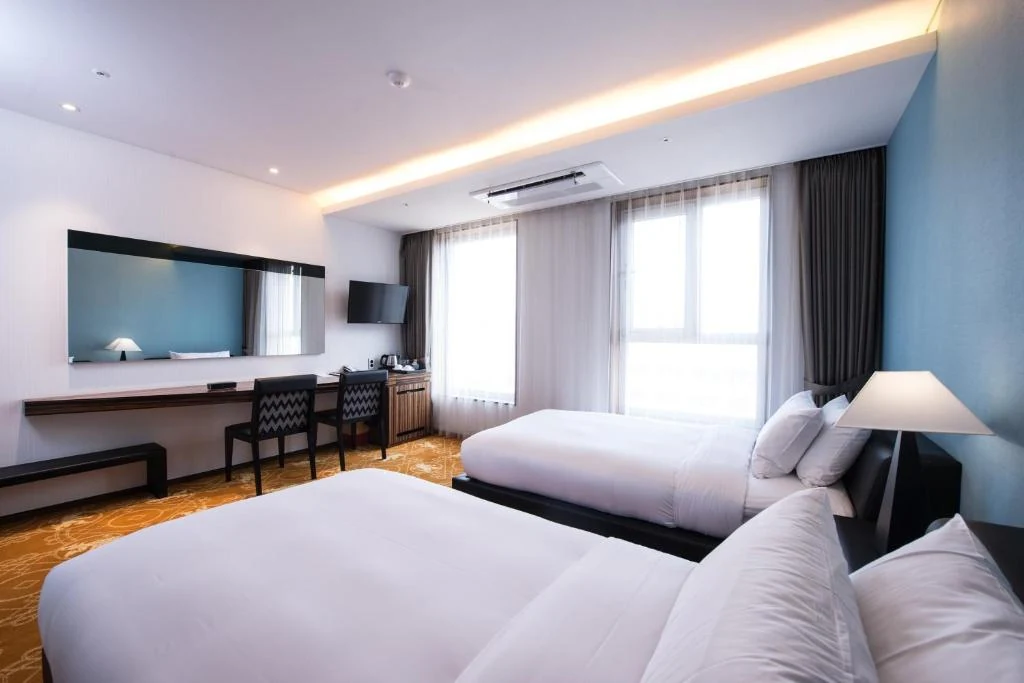
Choose Ecograd Hotel when Suncheon Bay owns the late afternoon and you want the evening to finish in the city. Its useful role is to make dinner, supplies and the hotel return one urban chapter after the wetland, so a delayed exit does not create another long transfer. It is not a promise that the Bay entrance is outside the door; the benefit is a calmer end to the whole day.
Open Suncheon stay optionsHotel Iam
Choose Hotel Iam when this is a one-night stop and luggage handling or the next morning's departure matters as much as the evening view. It can simplify arrival, bag storage, food and the following move, which is useful when you want a short Bay section rather than a late return. If the wetland is the full priority, compare the return conditions before assuming a central base solves every connection.
Match a Suncheon stay to the routeDecide whether the room is saving the late return, dinner logistics, luggage or the next morning.
Five questions to answer before you leave
- Is the wetland the real purpose, or is the sunset image doing all the persuading?
- If tide, cloud or wind weakens the Bay, does the shortened day still work?
- Have you included the walk back from the viewpoint and the wait after the last look?
- Can dinner remain useful if the Bay is thirty minutes late?
- Does the hotel save a return transfer, a luggage move or the next morning's departure—and which matters most?
Common questions
Do Suncheon Bay and old downtown have to be done on the same day?
No. If the late landscape is the reason for the trip, keep downtown to dinner. If food and city life matter more, walk a representative Bay section in daylight and leave the long wetland experience for another day.
Can the tide table decide the visit time?
No. It is one condition, alongside access, paths, weather, safety and the return. A tide time does not open a closed section or guarantee a particular view.
Should I reserve a downtown restaurant?
Reserve when one restaurant is central to the trip, but keep a later or nearby alternative if the Bay is weather-sensitive. A flexible meal usually fits a sunset route better than a reservation that forces a rushed exit.
Is the late Bay visit worthwhile in winter?
It can be, if the group can handle the wind and still has a safe, comfortable return. With early darkness or poor surfaces, a shorter daylight walk followed by an early city meal is the stronger route.
Is a Bay-side stay always better?
Only when the next chapter also faces that side and the late return is the main priority. If dinner, luggage and the next morning point toward town or the station, a city base may save more of the trip.
The cleanest Suncheon hand-off leaves the Bay with enough light and walking time to be a real visit, then lets old downtown receive the group without another race. Separate tide, sunset, the walk back, transport and dinner, and let the season decide how long the wetland chapter can be. That is how an evening route stays usable when the view, weather or timetable changes.

Use the evening to learn what the day was really for
After a wetland visit, old downtown can feel less dramatic than the water and sky. That is precisely why it works as an ending. A meal gives everyone a chance to compare the day without walking another kilometre, and a short street section shows how a regional city continues after the visitors leave the open landscape. Do not ask the town to repeat the Bay. Let it provide a different scale and a practical finish.
For a two-night stay, use the first evening as a test rather than a second attraction race. Notice how long the return took, where the group slowed down, whether bags and rainwear were awkward, and whether a city dinner was easier near the hotel or near the station. The next day can then be built around the answer: a longer Bay block, a garden visit, or a town-led plan that keeps the wetland optional.
Mixed groups benefit from a clear minimum plan. Decide the one wetland section everyone will see, the one meal everyone can reach, and the point at which people may stop. A companion who wants to photograph the changing light can remain only when the meeting place and return method are clear; another companion should not be forced to stand in wind because the sunset is still possible. Small choices like a dry bag, a spare layer and a saved pickup point can protect the experience more than another viewpoint.
Keep a short record after the trip. If the group remembers the reeds but not the city, the next visit may deserve a town-led night. If the Bay was beautiful but the return consumed the meal, move the hotel or shorten the wetland route next time. The value of this itinerary is that it tells you what to protect on the next visit, not that it proves every stop can fit in one evening.
That record also helps with children, older travellers and anyone carrying equipment. The most useful question is not whether the group reached the farthest boardwalk, but whether everyone could leave while they still had energy. A shorter route with a dry place to sit and a known dinner is often the better wetland memory. Keep the next visit open for the section you did not reach rather than turning one late connection into a reason to over-plan every future day.
KriNavi decision card
Best use of this page: Suncheon Bay and Old Downtown: Protect the Wetland Light, Then Choose the Evening
Core judgement: Connect Suncheon Bay with old downtown by separating tide, sunset, walking, transport and dinner time. Build a route that can shorten without turning the final service into a gamble.
This card only reorganizes sources already listed by the page. Recheck live hours, prices, service, and restrictions for the travel date.