
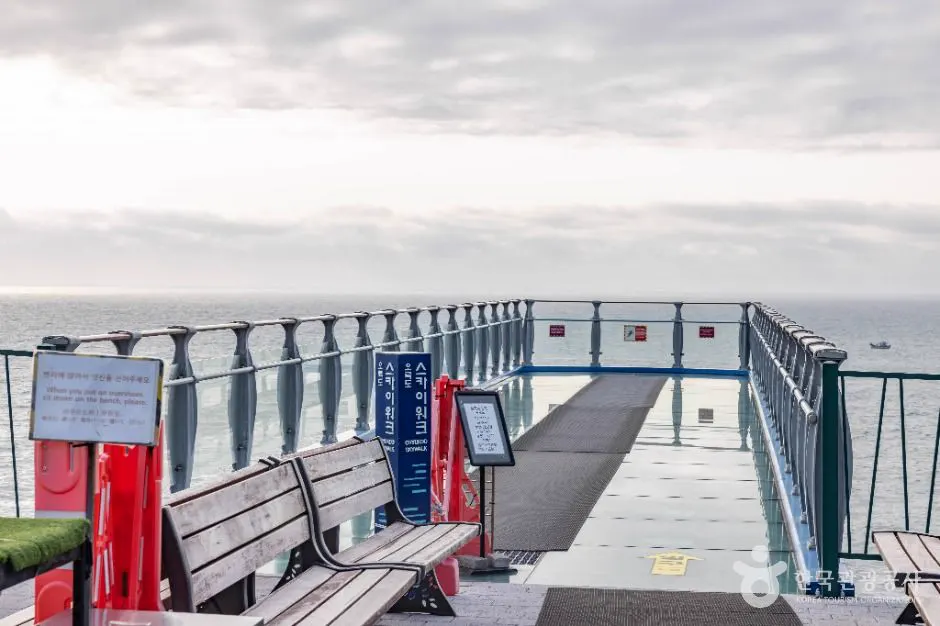
Busan coastal field dispatch
Gadeokdo is a coastal outing that asks for a decision before it asks for a photograph. The island side of Busan can feel far from the central city, and the road, wind, exposure and return time all become part of the route. A good visit may end at a lighthouse, a harbour or the first clear view of the water. None of those endings is a lesser version when it matches the day. The practical skill is knowing when to continue and when to turn back.
The go-or-turn-back card
| Check before leaving | Go to the lighthouse section | Choose the harbour-only version |
|---|---|---|
| Wind and exposure | Wind is manageable and the group can stand without bracing | Gusts make the open edge unpleasant |
| Road and parking | Arrival, parking and departure are understood | Traffic or the return route is still uncertain |
| Footing | Shoes and pace suit the surface | Wet, uneven or slippery ground changes the risk |
| Time | There is a daylight buffer after the walk | The return already depends on a tight final connection |
Why the coast needs a threshold
Central Busan makes it easy to keep adding one more viewpoint. Gadeokdo changes that habit because every extra section is attached to a road, a bend, a parking decision and the time it takes to get back. A lighthouse may be visible on a map while the comfortable walking line is longer than the straight distance. The route also changes character when the wind rises. A group that was happy beside the harbour may not want to stand on an exposed point.
Set the threshold while everyone is still warm and decisive. Agree what would make you stop: a wind that pushes people sideways, a wet surface, a driver who needs to leave before dark, or a traveller who has reached their walking limit. A turn-back rule is not pessimism. It is the part of the plan that allows the group to enjoy the first section without bargaining at the most exposed point.
Read the coast in layers. The harbour tells you how the water and boats are behaving. The approach road tells you how much time remains. The path tells you whether the group can move safely. Only after those three readings should the lighthouse become the next target.
Dispatch sequence: harbour, approach, lighthouse, return
- Harbour reading. Start where the group can sit, use a toilet and observe the water without committing to a long walk. If the harbour already feels too windy or the road is slower than expected, keep the visit here.
- Approach reading. Check the actual walking surface, slope and places to pause. The fastest member should not be the only person deciding that the path is easy. Count the return distance from the slowest realistic pace.
- Lighthouse decision. Continue only if the group still has daylight, footwear and attention. Keep the final section short enough that a person can turn around without being left alone.
- Return reading. Leave while the route is familiar and the driver or transfer has margin. The coast is complete when the group reaches the planned exit, not when it has exhausted every possible angle.
| Observation | Interpretation | Action |
|---|---|---|
| Calm harbour, clear approach | The route has capacity for one focused extension | Walk toward the lighthouse and reassess once |
| Calm water but strong ridge gusts | The harbour is not a guarantee for the exposed edge | Use the harbour view and stop before the open section |
| Wet steps or unstable footing | Distance is no longer the only risk | Turn back or choose a flat port segment |
| Road delay and fading light | The return is becoming the main activity | End at the next safe viewpoint |
Three versions of the day
Full lighthouse outing
Use this when the weather is stable, the road is understood and the group wants the coast as its main story. Keep one harbour pause and one lighthouse section. Do not add a second remote point after the return has started.
Harbour and short shore
This is the strongest middle option. Eat or rest near the port, walk only as far as the group remains together, and save the lighthouse for another clear day. It works well for families and a half-day window.
Central Busan reserve
Keep a city route ready when wind, access or road time is unresolved. A backup protects the holiday because it turns uncertainty into a choice rather than a long drive to discover that the coast is uncomfortable.
These versions should not be presented as a ranking. They answer different days. The full outing gives the coast more time; the harbour version gives the group more control; the central reserve gives the trip a reliable rhythm. Decide with the conditions you have, not with a picture from a better day.
Road, base and recovery planning
| Base or mode | Strength | Pressure point | Use it when |
|---|---|---|---|
| Central Busan base | Many indoor and food alternatives after the coast | Longer approach and return | The coast is one optional day |
| Western Busan base | Less backtracking and more room for a slow coast | Fewer last-minute central choices | Gadeokdo is a main theme |
| Car | Useful for flexible harbour stops and equipment | Driver fatigue, parking and road delays | The driver accepts a fixed turn-back time |
| Public transport | No parking stress and a clear shared ride | Fewer spontaneous changes at a remote edge | The group can follow the return window |
With a car, write the departure time on paper or in the shared chat before setting off. The driver needs to enjoy the coast too, so the plan should not assume an endless wait while everyone photographs the final light. With public transport, treat the official stop as part of the attraction: arrive early enough to identify the boarding point and keep the last walk short.
Accommodation is a recovery tool. A central room lets the group replace the coast with an indoor plan without wasting the whole evening. A western room gives the coast a calmer return but may make a late change of city plans less convenient. Choose the base according to the route version, and do not use a remote room to justify a route that the weather does not support.
Build one quiet pause into the road plan. A remote coast often creates a false sense that stopping means losing time, so the driver keeps going while everybody else becomes tense. A ten-minute break to drink water, check the next road and ask whether the lighthouse still fits can prevent a much longer argument at the end. The pause also gives the group a chance to notice a changing sky or a safer harbour view that was invisible from the car.
Keep the last kilometre honest. A sign that says a viewpoint is close does not describe the slope, the surface or the distance back to the vehicle. If one traveller chooses not to continue, give that person a safe waiting arrangement and a clear time, or turn the whole group around. Do not leave someone alone at an exposed edge simply to preserve a photograph.

Make the lighthouse meaningful
A lighthouse is useful as a point of orientation, not just a bright object at the end. Notice how the harbour, road and open water meet. Look at the direction of the wind and the way the coast protects or exposes a vessel. That observation gives the short route its own content even when the group turns around early.
Photography should follow the field conditions. On a windy edge, a small camera and a short composition are kinder to the group than a long tripod session. Keep people away from working lanes and do not climb a barrier for a wider frame. A photograph that requires someone else to take a risk is not a successful travel memory.
Families can give children a job: find the safest place to watch the boats, count the pause points or check that everyone has water. Older travellers may prefer the harbour's level surface and a view that does not require reaching the lighthouse. Those choices are ways of reading the coast, not compromises to apologise for.
Seasonal thresholds
Spring: Clear days can arrive beside sharp gusts. Keep a layer and test the harbour before committing to the open coast. A bright sky is not proof that the footing is dry.
Summer: Heat on the approach road and sudden rain can make a remote route tiring. Carry water, start earlier or later as conditions allow, and keep a simple port ending ready.
Autumn: The low sun can make the sea look calm while the wind remains strong. Use the light as a reason to return before darkness, not as a reason to extend the walk.
Winter: Cold hands, shorter daylight and wet surfaces reduce the margin quickly. A harbour-only visit with a warm meal can be the complete winter route.
Field signals
Positive signals
- The group has named a turn-back point before reaching the exposed edge.
- The driver or transfer has a departure window that is not a guess.
- Footwear, layers, water and phone battery match the route.
- The harbour already feels worthwhile without the lighthouse.
- Everyone can see how to return to the planned exit.
Limitation signals
- A lighthouse photograph is being used to overrule wind or wet ground.
- The road time is being estimated from a straight line on a map.
- The fastest walker is setting the pace for people who cannot match it.
- The group has no food, toilet or indoor recovery option.
- The last section is being added after the return buffer has disappeared.
FAQ
Is Gadeokdo suitable for a short Busan trip?
It can be, if the coast is the day's main decision and the return is protected. It is less suitable as an unplanned add-on after several central attractions.
Do I need a car?
A car can make the harbour and recovery options more flexible, but it adds parking and driver duties. Public transport works when the group accepts a clearer return window.
What if the wind rises after arrival?
Use the harbour as the completed version, shorten the shoreline and leave before the exposed section becomes uncomfortable. A good turn-back plan should be easy to use.
Can children walk to the lighthouse?
Only if the surface, weather, pace and return time suit them. Give them a harbour option and do not make the final point a test of endurance.
Can I combine Gadeokdo with Taejongdae?
They are separate coastal decisions. Combining them can erase the road and recovery margin, so keep the second coast for another day unless the whole schedule is built around it.
Where should I stay?
Central Busan gives the strongest backup network. A western base reduces backtracking when Gadeokdo is the main purpose. Match the room to the route version you can actually complete.
Gadeokdo gives Busan a different scale of sea: working harbours, long roads and a horizon that does not arrive on demand. Treat the lighthouse as an option inside a field route. When the wind, road, footing and return agree, continue. When they do not, stop at the place that already gave the group a clear view of the coast.

Keep a Busan recovery route
Place the remote coast beside a wet-weather option, a closer shoreline and a sensible base.
Set wind, footing, road and turn-back rules before choosing the lighthouse or harbour version.
Stay choices for the coastal loop
Hotel Foret Premier Nampo
Use it when Gadeokdo is your western-south Busan day. Returning to Nampo for food and a proper drop-off saves another cross-city ride; it is a recovery base, not a hotel beside the lighthouse.
See Busan stay choicesWyndham Grand Busan
Choose it only when the following day also covers Songdo or Nampo. A western coast base cuts repeated city crossings, but it does not turn Gadeokdo into a walkable hotel excursion.
See Busan stay choicesDecide whether the base should shorten the western loop or keep a central backup, then check the room and transport details.
Before departure, recheck coastal access, wind, road conditions, parking and the return.
KriNavi decision card
Best use of this page: Busan Gadeokdo lighthouse coast: A go-or-turn-back plan for wind, road time and the sea
Core judgement: Read wind, road margin and shoreline effort before choosing a Gadeokdo lighthouse coast outing, a short harbour stop or a town-based backup.
This card only reorganizes sources already listed by the page. Recheck live hours, prices, service, and restrictions for the travel date.