
KRINAVI TRIP FIT
Score withheld
No numeric score is shown because this page does not yet have an external verification source. Use the planning checks, then confirm official information before booking or departure.
You can travel Jeju without renting a car, but it works poorly if you treat the island as a checklist that must be completed in three days. First-time visitors, travelers who do not drive, anyone who wants a drink with dinner or simply does not want to deal with parking can have an excellent trip. The trade-off is being more selective about distance and letting the hotel support the direction of each day.
The biggest bus problem is not speed; it is starting from the wrong base every morning
Car-free Jeju is often described as time-consuming, but the real waste comes from repeatedly trying to reach yesterday's missed direction. If you stay in Jeju City and expect to cover Seogwipo, Seongsan and Aewol on separate long runs every day, no transport system will make the itinerary elegant. Buses can handle a clear mission such as “stay north today” or “commit the day to the south.” They are poor at rescuing an itinerary that refuses to choose.
That makes the accommodation base the first transport decision. Late arrivals, early departures and travelers who value city dinners should compare Jeju City as a base. If southern coastlines and waterfalls dominate, compare staying in Seogwipo. If you have not chosen between them, start with where to stay in Jeju before worrying about bus tickets.
Separate “reachable” from “worth reaching this way”
A map can tell you that a bus serves an attraction. It does not show how long you will walk after getting off, how painful one missed bus can be or whether the final return makes dinner stressful. A stable car-free day usually has one main cluster and one optional stop. Spend the morning in one coastal area, keep lunch and the afternoon nearby, and return to the hotel if weather turns rather than forcing a second cross-island transfer.
Missing one landmark rarely ruins a first Jeju trip. Missing the return connection can. Meal time, café stops, bathrooms and finding the correct stop all consume real time, so leave at least one bus worth of buffer in the plan. Timetables and stops can change; recheck current official information before travel, especially for evenings, holidays and routes with multiple transfers.
Use the most conservative transport plan on luggage and flight days
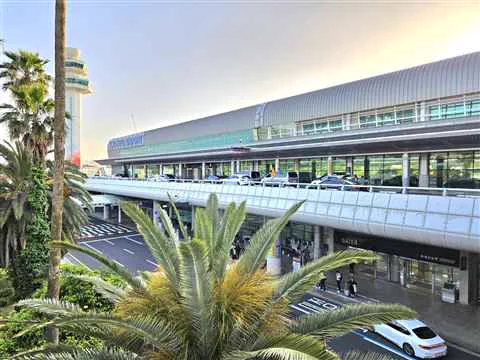
A half-day with two suitcases should not be planned like a normal sightseeing day. Getting settled first usually produces a better arrival than landing and immediately chasing a distant attraction. Departure day should also avoid a no-buffer connection. Use Jeju Airport to hotel planning to decide whether to leave bags first and how much margin the final transfer needs.
Older travelers, young children or limited mobility do not automatically make a car essential, but boarding and walking distance must become real itinerary costs. Choosing a closer attraction to remove a transfer is often more useful than adding two extra stops on paper. Families that need a midday hotel return should also compare whether a rental car solves enough friction. A trip can be car-free for two days and use a vehicle for one.
On rainy days, change the route instead of defending it
The worst response to rain is following the exact sunny-day coast plan simply because the bus research is already done. Waiting outdoors, walking to stops and exposed coastal paths all become less pleasant together. Indoor attractions, city markets or cafés near the hotel should be genuine replacement days. Keep a Jeju rainy-day alternative ready so weather can change the route without turning the day into a rescue operation.
Clear weather does not mean you should keep adding stops either. The freedom of a car-free day comes from being willing to stop early. If an afternoon by the coast is already working, staying for sunset may fit the trip better than chasing another famous place because a connection happens to exist.
Three days and five days need completely different car-free logic
On a three-day trip, protect arrival, departure and one genuinely full outing. Do not try to squeeze two distant directions into the middle; choose one side and go deeper. Use the three-day Jeju itinerary to test whether the hotel and daily route agree. With five days or more, splitting north and south or changing hotels once becomes more realistic, though that still does not justify crossing the island every day.
If east and west both appeal, make a choice. Explore one side properly by bus, save the other for another trip or use a short rental period for the harder day. The Jeju east-vs-west decision is more useful than memorizing more routes because it decides whether you begin the morning with breakfast or with a transport chase.
Transfer time is not empty time; it determines how much energy remains
The common planning mistake is counting only time inside the bus. Walking to the stop, confirming direction, finding a bathroom, buying a snack and waiting for companions can turn a twenty-minute ride into a much larger block. That does not make buses bad. It means self-drive pacing is the wrong benchmark. Spending longer within one area and removing one transfer is often where car-free Jeju starts to feel good.
If two attractions connect through an awkward transfer, ask how much time remains after arrival. If the answer is forty minutes, the stop may not deserve the effort. Replace it with a market near the hotel, a coastal walk or a restaurant you actually care about. The final stop of the day should also be somewhere with a straightforward return so dinner is not reduced to a task before the last bus.
Research the data, but do not let research replace the directional decision
Before leaving, save the hotel address, Korean names of destinations, useful bus stops and your latest acceptable return time in an offline note. Mobile signal, battery and temporary route changes can slow down on-the-spot research. Timetables and fares are dynamic, so verify current official information rather than using an old blog departure time as today's answer.
Tools can answer “how do I get there?” They cannot decide “is this still worth doing today?” If you are constantly switching between search results, the problem may be too many destinations rather than too little information. Return to accommodation, trip length and weather. Recheck the Jeju base or compare whether one driving day would actually save meaningful time.
A realistic car-free day should contain something you are willing to drop
Give each day one must-do, one good-weather bonus and one stop that only happens if the return remains easy. The first gives the day a purpose, the second rewards favorable conditions, and the third is never allowed to damage the route back to the hotel. It is not glamorous planning, but it means one missed bus does not make the whole day feel like a failure.
Car-free Jeju is not a reduced version of the island. It narrows the choices and makes the time at each place more visible. With the right base, one clear direction per day and a real return buffer, buses can still give you sea air, slow breakfasts and the freedom of never hunting for parking.
If you still feel something is missing after building the route this way, identify what kind of regret it is. If there is one place that is genuinely hard to reach without a car, make that a short rental day. If the discomfort comes only from seeing empty space in the schedule, keep the space. The road from the bus window, time for a hot drink and an early evening back at the hotel are part of the trip too.
Do not end a car-free day by adding one more attraction
Before dinner, check only tomorrow's first movement and the day's return window. If a day needs three or more long transfers, the answer is usually not an earlier alarm. Delete a stop, change base or make that the driving day.
The strength of a car-free Jeju trip is that it forces priorities into the open. Once you stop measuring success by the number of districts covered, one coastline, one good meal and an easy evening can already make a full day. Return to the Jeju travel planning hub and choose the next accommodation or itinerary decision from there.
KriNavi decision card
Best use of this page: Jeju Without a Car: How to Plan a Bus-Friendly Trip
Core judgement: Use Jeju Without a Car to compare the route, timing and practical trade-offs before finalising the trip.
This card only reorganizes sources already listed by the page. Recheck live hours, prices, service, and restrictions for the travel date.