KRINAVI TRIP FIT
Score withheld
No numeric score is shown because this page does not yet have an external verification source. Use the planning checks, then confirm official information before booking or departure.
Seogwipo works best when you genuinely want the south to carry the trip: coastal walks in the daytime, dinner without rushing, and no mental countdown to the drive back to Jeju City. It is a weaker choice if the main appeal is one sea-view hotel night and the next morning sends you north or east again. The real value is not scenery; it is eliminating repeated backtracking across several days.
Start by asking whether the south will use two of your evenings
The easiest test is not how close Seogwipo is to one attraction. Ask whether at least two evenings naturally end in the south. If yes, dinner, an extra coastal stop and an early return to the room all become easier. If the answer is only one night, checking out, moving luggage and checking in again may not earn enough time back.
Three-day trips need particular restraint. Arrival and departure already fragment the itinerary, so adding a hotel move can leave only a handful of useful half-days. Write out your three-day Jeju route first. A five-night stay is much better positioned for a two-base plan because two consecutive middle days can genuinely benefit from being south.
The biggest benefit is not watching the clock all afternoon
When you day-trip south from the north, the morning is usually manageable. The pressure arrives later, when you start calculating darkness, traffic, driver fatigue and how long the group can keep going before the return. Staying in Seogwipo does not shrink every distance, but it removes that end-of-day countdown. Dinner, rest and tomorrow's first stop can stay in the same direction.
That is especially useful for slower trips. You can extend a walk, wait for the light to change and choose dinner afterward instead of ending the day around the return drive. But if your evenings depend on lots of shopping, dense dining options and transport flexibility, the north may still fit better. Compare when Jeju City makes the stronger base before treating “I want a coastal hotel” and “I should stay south” as the same decision.
Having a car does not make Seogwipo irrelevant
Drivers sometimes assume location no longer matters because every part of Jeju is technically reachable. A car creates flexibility; it does not erase mental fatigue, rain, post-dinner driving or the effort of getting everyone back after a long day. If the south is your main direction for two consecutive days, Seogwipo can still remove one long return each evening. If the south is only one stop, driving does not make the cost of moving hotels disappear.
Before renting, read whether you actually need a car in Jeju. If you drive only for the middle two days, moving the hotel during that same period may make sense. If you are car-free, you need to be even more precise about the hotel address and the first and last transport segment of each day. Seogwipo is not only for drivers, but both travel styles need a clearer route before booking.
Rainy days reveal whether the Seogwipo location actually works
On a clear day, sea views and coastal paths make almost any southern location look appealing. Rain and strong wind expose the real quality of the base. Can you eat comfortably nearby? Is the walk back to the hotel easy? Are there enough alternatives that do not require forcing an outdoor plan? Keep a Jeju rainy-day plan beside the hotel decision rather than discovering too late that the whole stay depends on sunshine.
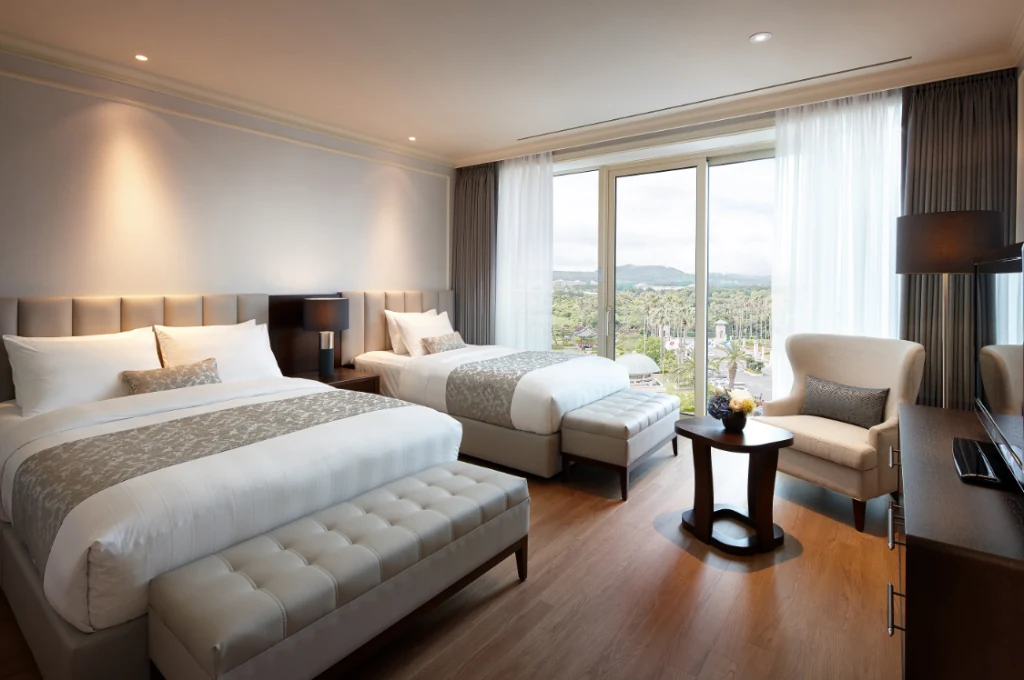
The same rule applies to sea-view rooms. The moments you use the hotel most may be unpacking after arrival, waiting out rain, coming back after dinner and getting ready the next morning. A location that makes those moments easy can matter more than how much ocean fits into the daytime balcony photo.
Build Seogwipo as a continuous segment, not a random insert
The smooth version is simple: arrive in Seogwipo, finish that day nearby, give the next full day to the same side, and only then move on. The inefficient version goes south in the morning, back north in the evening, then changes direction again for another attraction. That is not “seeing more of Jeju”; it is spending the benefit of your base on unnecessary movement.
If you are still undecided between east and west, use Jeju east vs west to remove one direction first. If airport access, late arrival and car-free convenience matter most, go back to the overall Jeju stay-base decision. A good hotel base will not make every attraction close; it makes the most important days less rushed.
Before booking, ask one final question: where do you want this day to end?
If the answer is “after the coast, I want dinner, an easy walk back and another southern start tomorrow,” Seogwipo has a clear reason to be in the plan. If the answer is “after landing, I want no more movement,” “I need more evening choice,” or “tomorrow starts in the north,” Jeju City probably fits better. Do not try to satisfy both by moving every night. Choose the evening you most want to protect.
Do not use the hotel name as a substitute for location
Search results for Seogwipo hotels make it easy to get distracted by a sea view, resort brand or famous landmark. Those can be benefits, but they do not replace the address. Check how the hotel connects to each day's first stop, whether dinner is easy at night and whether getting from the nearest transport point to the property is awkward with luggage. Repeated daily movements deserve more weight than one-time facilities.
Even under the same Seogwipo label, one property may sit near a denser area while another is far quieter along the coast. The first can suit travelers who want dinner and flexibility without driving every night. The second can suit those who actively prefer calm and accept that meals and shopping need more planning. Neither is automatically better; the mistake is expecting one hotel to provide both lifestyles.
Count the hotel move once, then compare it with the backtracking it removes
Some travelers avoid changing hotels at any cost and stay north for the entire trip. Others build a two-base itinerary without counting checkout, luggage storage, check-in timing and bags in the car. The right question is not whether moving is annoying; it is whether that one move replaces two or more repeated long returns. Saving one drive usually is not enough. Removing two consecutive late-afternoon returns can be.
On the moving day, do not attach a huge scenic route. Leave the morning for checkout and relocation, then put one thing you genuinely want to do near the new base in the afternoon. That margin is what turns a two-base plan into a smoother itinerary rather than another task to survive.
Car-free travelers should accept a little less spontaneity in Seogwipo
You can stay in Seogwipo without renting a car, but the day needs an earlier directional choice. Bus travel is poorly suited to deciding at breakfast that you want lunch across the island and then returning south for sunset. It works better when one side gets most of the day. Put the hotel, relevant stops and the return journey into the same plan, then use the Jeju car-free travel guide to check your buffer.
The upside is that car-free travel can make slowing down easier. One fewer transfer, an earlier return and dinner near the hotel do not need to feel like compromises. If the goal was always to spend meaningful time in the south rather than collect the whole island, Seogwipo can still deliver a very complete trip.
Different travel groups use Seogwipo differently
Couples and solo travelers usually find it easiest to enjoy the slower southern rhythm because changing dinner plans, extending a walk or returning early needs little coordination. Families should prioritize room setup, food and how easy evenings are with children. Kids do not automatically mean “stay in the city,” but if every day requires frequent supplies and flexibility, the north may still be the steadier option. Friends should agree on sunrise, sleep-ins and driving expectations before a beautiful but inconvenient base becomes the source of waiting.
The goal is not to find one hotel that satisfies everyone perfectly. It is to avoid putting the most easily exhausted person in the hardest base. If the group's needs are scattered, reducing the number of attractions is often a better compromise than adding more road time.
Once you choose Seogwipo, let the hotel shape the route
As soon as Seogwipo becomes the base, add nearby dinner options, a rainy-day fallback and the next morning's first stop to the plan. Do not book south and continue thinking as though every day still begins in Jeju City. If the final itinerary leaves only half a day in the south, move the booking back north rather than inventing reasons to justify it. A good base makes the trade-offs clearer instead of demanding excuses.
Once the decision is made, return to Jeju travel planning and connect the stay to transport and trip length. Accommodation is not just where the day ends; it decides how much patience and flexibility the group still has when the day is over.
KriNavi decision card
Best use of this page: Where to stay in Seogwipo: choose it to protect your south-Jeju days, not just for the sea view
Core judgement: Choose Where to stay in Seogwipo by location, return time, room fit and transport before booking.
This card only reorganizes sources already listed by the page. Recheck live hours, prices, service, and restrictions for the travel date.